


|
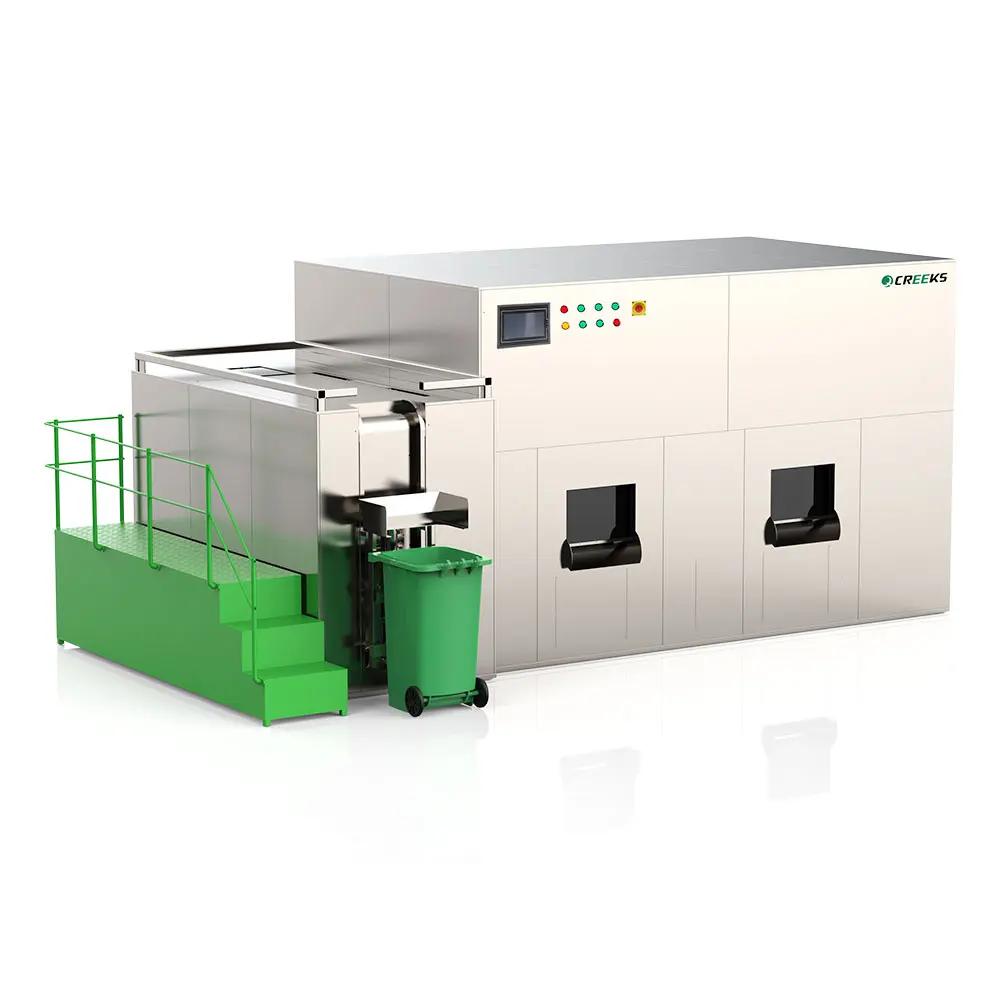
When meat by-products, trimmings, and food scraps pile up faster than you can haul them away, an enclosed in-vessel composter turns the problem into a daily routine. Creeks composters are fully automatic, electric units that convert organic waste into treated compost in 12 to 24 hours, instead of the weeks or months an open pile requires. Built from stainless steel and designed for processing floors, food plants, and high-volume kitchens, these systems let your team load the waste, close the door, and let the controls handle the rest. Request a quote to match a model to your daily volume. |
|
How an In-Vessel Composter Turns Organic Waste into Compost
Open piles and windrows depend on weather, turning schedules, and plenty of space. An in-vessel system moves the process indoors, into a closed vessel where heat, moisture, and air are managed by the machine. State environmental agencies define in-vessel composting as a process where decomposing organic material is enclosed in a drum, silo, bin, tunnel, or other container and conditions are controlled, as explained in this state overview of composting types.
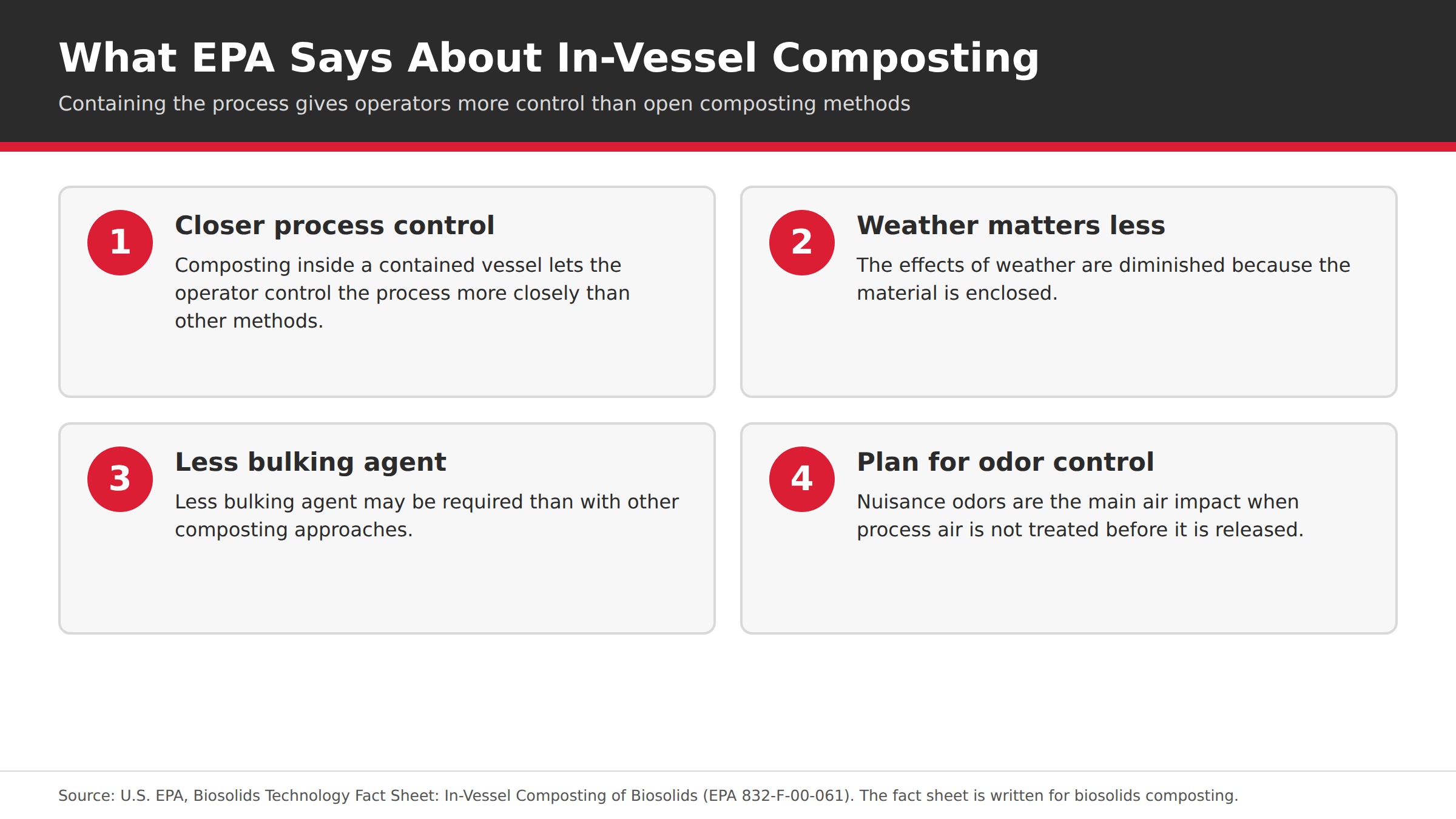
EPA's technical fact sheet on the method lists the practical benefits. Closer process control, less weather influence, and a smaller need for bulking material all follow from keeping the material inside a vessel.
Why Choose an In-Vessel Composter Over Open Piles
Open piles are inexpensive to start, but they ask a lot of the people running them. Material has to be turned on a schedule, weather can stall or flood the process, and meat or food waste left outdoors attracts pests and complaints. An enclosed vessel removes most of those variables.
| Factor | Open Pile or Windrow | In-Vessel Composter |
|---|---|---|
| Weather | Rain, cold, and wind affect the pile | Enclosed, so weather has less effect |
| Process control | Depends on turning and moisture checks | Managed by the machine's controls |
| Meat and food waste | Exposed to pests and odors | Contained inside the vessel |
| Daily labor | Loader time and turning schedules | Load, close, and let the cycle run |
| Turnaround | Weeks to months | 12 to 24 hours for Creeks models |
The tradeoff is up-front cost. EPA notes that in-vessel composting generally costs more than other composting methods, particularly in capital cost. For plants that pay for hauling every week, or that cannot leave meat by-products outdoors, the daily time and handling savings are what make the investment worth running the numbers on.
Controlled Heat, Moisture, and Airflow
Composting is a biological process, and microbes work fastest when conditions stay steady. Inside a closed vessel, heat and moisture stay where the microbes need them, and the operator is not racing the weather or a turning schedule. The result is a faster, more predictable path from raw waste to a stable, manageable solid.
Aerobic Processing with No Methane
Creeks composters are aerobic, electric machines. Unlike anaerobic systems, they do not require gas capture, methane handling, or complex plumbing, which keeps installation simpler and the day-to-day routine closer to running any other piece of plant equipment.
Enzymes and Microbial Decomposition
The Creeks process combines electric processing with microbial decomposition, assisted by enzymes, to treat waste in a single day. The largest 10-ton model requires added bacteria as part of its decomposition method, so plan for that supply when you size a high-volume system.
Creeks Composters Built for Meat By-Products and Food Waste
Traditional composting handles yard waste and manure well, but meat by-products and food scraps are harder to manage in an open pile. Creeks units were engineered for exactly these materials, from trimmings and internal organs to bones and hides, breaking animal organics down into a stable, manageable solid.
- Fully automatic operation: intelligent controls run the cycle and sound an automatic fault alarm if something needs attention.
- 24-hour turnaround: processing time is 12 to 24 hours, so the vessel is ready to load again the next day.
- Stainless steel construction: SUS304 stainless steel stands up to wet, acidic organic material.
- Odor management: internal deodorization is standard, with an optional extra deodorizer available.
- Aerobic, electric process: no methane and no gas capture equipment to manage.
Who Uses Industrial Composter Systems
These units suit meat plants and food factories that generate offal and trimmings every shift, along with schools, hotels, restaurants, hospitals, offices, supermarkets, and markets that produce large volumes of food waste. The mid-size models fit high-volume kitchens and food service operations, and the largest model is built for factory-scale output.
Clearing the Floor Daily for Hygiene
Processing plants live by strict hygiene protocols, and waste that sits on the floor or in bins becomes a problem. Because the vessel turns a day's waste into treated compost in about a day, teams can clear the floor on schedule instead of waiting on a pickup or paying to haul material away.
Not sure which size fits your waste stream? Send your daily volume and the type of material you handle, and our team will recommend a model.
Creeks Composter Models and Daily Capacity
Creeks composters are offered in four sizes, so capacity can match your daily waste volume without paying for a vessel you do not need. Larger operations can add more machines and pre-treatment equipment as volume grows.
| Model | Daily Capacity | Weight | Rated Power | Processing Time |
|---|---|---|---|---|
| CR-2000 | 2,000 kg (about 4,400 lb) | 3,400 kg (about 7,500 lb) | 40 kW | 12 to 24 hours |
| CR-3000 | 3,000 kg (about 6,600 lb) | 4,800 kg (about 10,600 lb) | 50 kW | 12 to 24 hours |
| CR-5000 | 5,000 kg (about 11,000 lb) | 6,800 kg (about 15,000 lb) | 80 kW | 12 to 24 hours |
| CR-10T | 10 tons | 13,000 kg (about 28,700 lb) | 160 kW | 12 to 24 hours |
Features Common to Every Model
- Waste volume reduction: at least 85 percent.
- Output: organic fertilizer.
- Material: SUS304 stainless steel.
- Control system: fully automatic intelligent control with automatic fault alarm.
- Deodorization: internal deodorization or an optional extra deodorizer.
- Operating environment: indoors at normal temperature with ventilation, or outdoors under a shelter.
- Power supply: listed as 380V, 50 Hz. Confirm electrical requirements for your facility before ordering.
Mid-Size Units for Kitchens, Schools, and Food Plants
The CR-2000, CR-3000, and CR-5000 handle 2,000 to 5,000 kilograms per day, which suits supermarkets, hotels, hospitals, schools, and food processors. Each is a self-contained electric unit that takes the place of daily waste hauling for the material it handles.
10-Ton Systems for High-Volume Facilities
The CR-10T processes up to 10 tons of organic waste per day and reduces volume by at least 85 percent. Compost is removed from the machines every week and can be sent to a soil center that converts it into an organic fertilizer tailored to specific operations. The system is highly customizable, and more composting machines and pre-treatment systems can be added to handle more waste.
What Happens to the Finished Compost
Every Creeks model reduces waste volume by at least 85 percent, and the output is an organic fertilizer material. That means a day of trimmings, scraps, and by-products becomes a fraction of its original volume that is far easier to store and move.
Handling and Using the Output
Plan a clean, dry place to hold finished material until it is removed. On the largest systems, compost is removed weekly and can go to a soil center that converts it into an organic fertilizer matched to specific operations. Smaller operations can work with their own end users, such as landscapers or growers, or ask our team how others handle the output.
Daily Operation and Upkeep
Day to day, operators load waste, close the door, and let the automatic controls run the cycle. The fault alarm signals when something needs attention, so staff are not tied to the machine. Keep loading areas clean, follow the operator manual for routine cleaning and inspection, and keep any added bacteria supplied on models that require it.
Creeks Composter Video
Choosing the Right Organic Waste Solution
An in-vessel composter is one of several ways to process organic waste, and the best choice depends on what you are handling and where. Creeks units are strongest for meat by-products and food waste at plants and large kitchens that need to clear the floor every day.
When a Different System Fits Better
For on-farm livestock mortalities, a drum-style composter for farm mortalities is built around that job. Meat processors that want to dehydrate by-products can compare a dehydrator for meat processors. If a digester-style approach is a better match for food scraps, review the digester-style food waste systems as well.
Pre-Treatment for Bones and Bulky Material
Large bones and bulky material break down faster when they are reduced in size first. Pre-treatment equipment, such as a grinder for pre-processing bones, can be paired with a composter to keep loading smooth and processing consistent.
Planning a Composter Installation
A short checklist keeps an installation on track. These steps also help our team recommend a model faster.
- Measure your daily volume. Weigh a typical day and a peak day so the model has headroom for busy periods.
- List what you will load. Trimmings, organs, bones, hides, and food scraps may call for different pre-treatment.
- Choose the location. Plan for indoor, ventilated space at normal temperature, or an outdoor shelter.
- Confirm electrical service. Compare the listed 380V, 50 Hz supply and rated kilowatts with your facility power.
- Plan loading and removal. Decide how waste reaches the loading doors and where finished compost will go.
Send those details through the contact form for a model recommendation, and our team will help you size the system and plan the installation. For a wider look at waste processing equipment, review the full lineup.
Creeks Composter Brochures
Detailed model sheets are available for the mid-size units.
Request a Creeks Composter Quote
Get a Custom Composter RecommendationTell us your daily waste volume, the materials you handle, and your facility type, and our team will follow up with a recommended model and quote.
|
Bierman Equipment supplies waste processing equipment to farms, processors, and food facilities nationwide.
Frequently Asked Questions About In-Vessel Composters
What is an in-vessel composter?
An in-vessel composter processes organic waste inside an enclosed drum, bin, or other container where heat, moisture, and air are controlled. Because the process is enclosed, it is less affected by weather and easier to manage than an open pile.
How long does a Creeks composter take to process waste?
Processing time is 12 to 24 hours for every Creeks model, which lets operators clear the floor daily instead of waiting for weekly pickups.
What can a Creeks composter process?
Creeks composters are engineered for meat by-products, including trimmings, internal organs, bones, and hides, as well as food waste from kitchens, supermarkets, schools, hotels, and similar operations.
Does the process create methane?
No. Creeks composters use an aerobic, electric process, so there is no gas capture equipment or methane handling to manage.
How much waste volume does the composter eliminate?
Volume reduction is rated at 85 percent or more across the Creeks lineup, with the output being organic fertilizer material.
Where can a Creeks composter be installed?
Units can be installed indoors at normal temperature with ventilation, or outdoors under a shelter. Confirm your facility power against the listed 380V, 50 Hz supply before ordering.
How do I choose the right model?
Start with your daily waste volume and the materials you handle. The CR-2000, CR-3000, and CR-5000 cover 2,000 to 5,000 kilograms per day, and the CR-10T handles up to 10 tons. Send your details to our team for a recommendation.