


Composting takes weeks to fully break down a load and creates the odor, runoff, and pest exposure that make biosecurity audits stressful. Incineration works fast but burns fuel hard and triggers emissions permitting in a lot of states. Poultry mortality disposal and hog mortality management do not have to mean choosing the lesser of two inconvenient options. The BioRoter Dehydrator from Triple Green Products runs a load from dead to dry, sterile material in as little as 8 hours, with none of the odor or biosecurity exposure a compost pile carries.
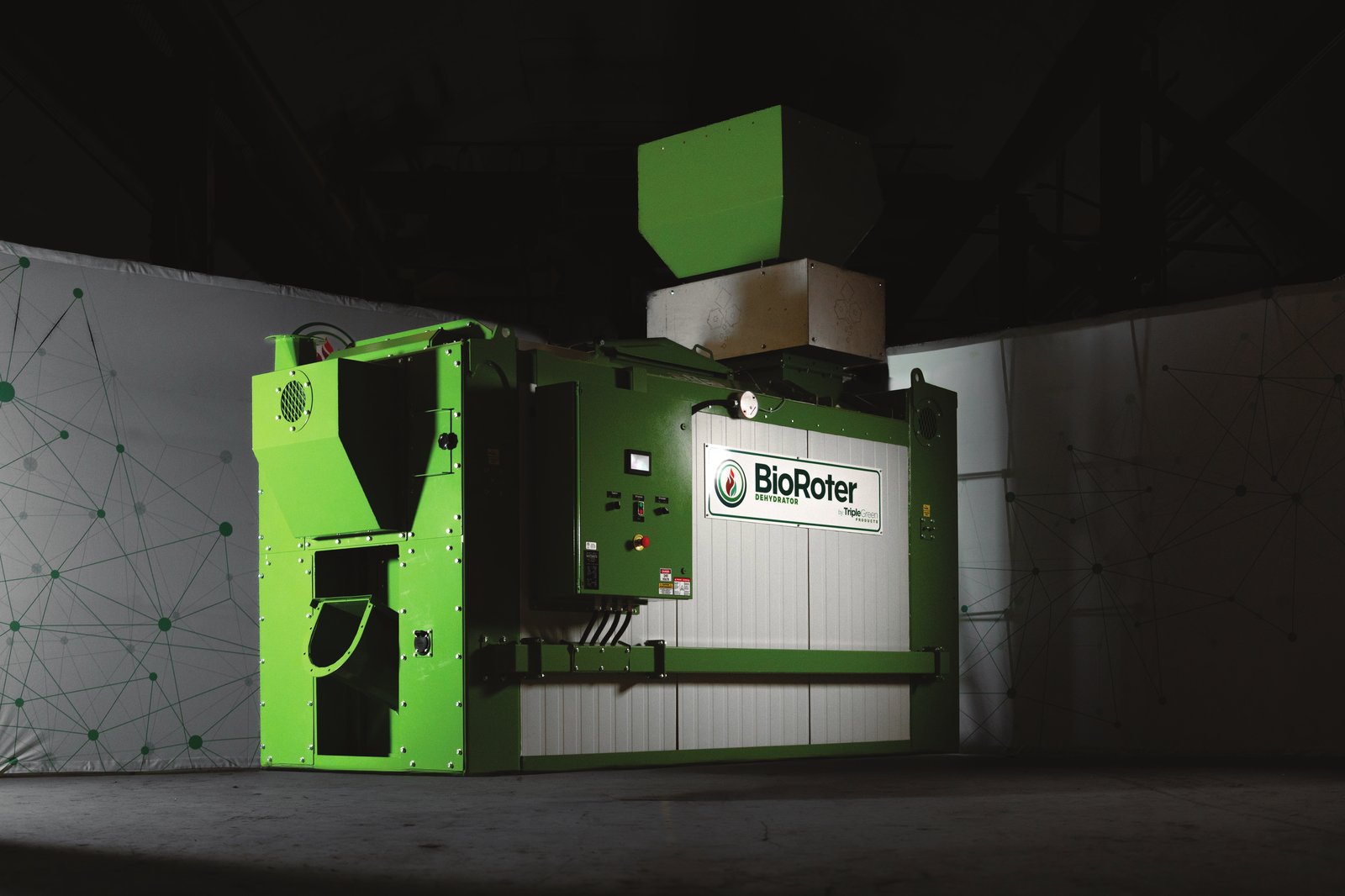
The BioRoter Dehydrator for Poultry Mortality Disposal and Hog Operations
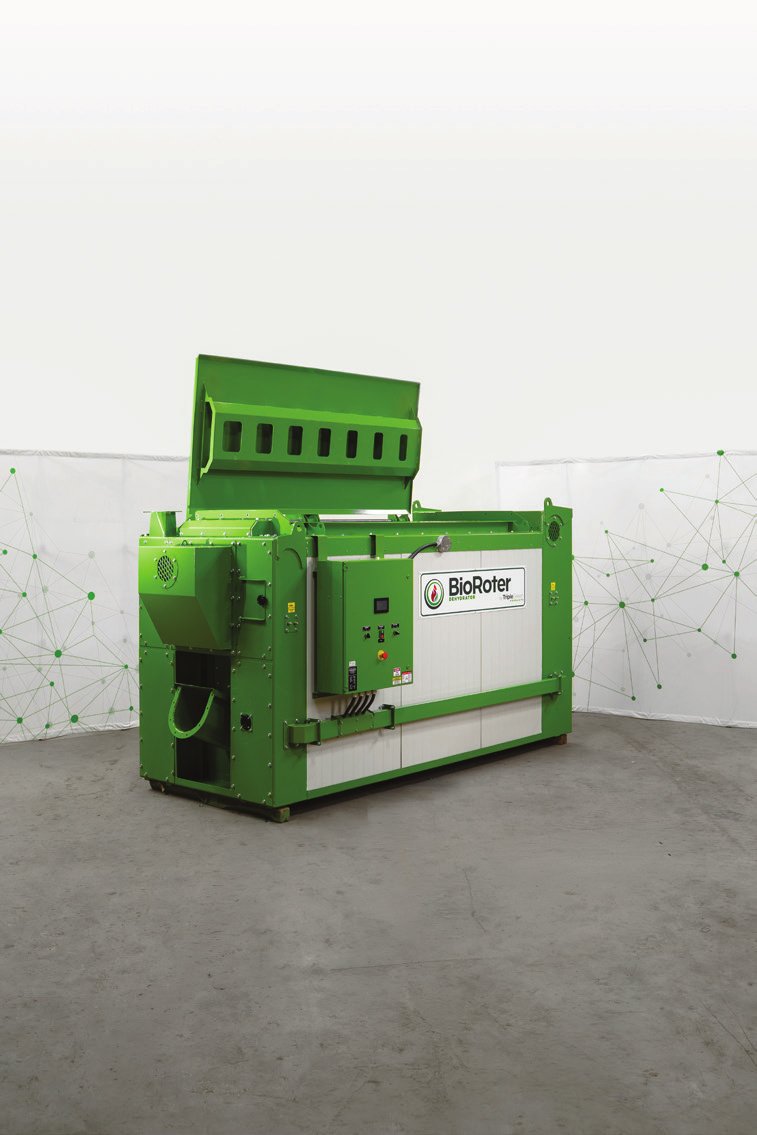
The BioRoter is a patented dehydration system built for poultry producers, hog operations, and processors who need a faster, cleaner alternative to composting and incineration. Instead of breaking material down over weeks or burning it off in hours at a high fuel cost, the BioRoter combines radiant and convective heat inside a heavy-duty stainless-steel hull to dry and sterilize a full load in 8 to 16 hours, depending on unit size and load.
Bierman Equipment offers the BioRoter as part of a broader lineup of waste processing solutions, giving producers a genuine third option alongside composting and incineration rather than a forced choice between two methods that each carry their own daily headaches.
Why Producers Are Rethinking Poultry Mortality Disposal
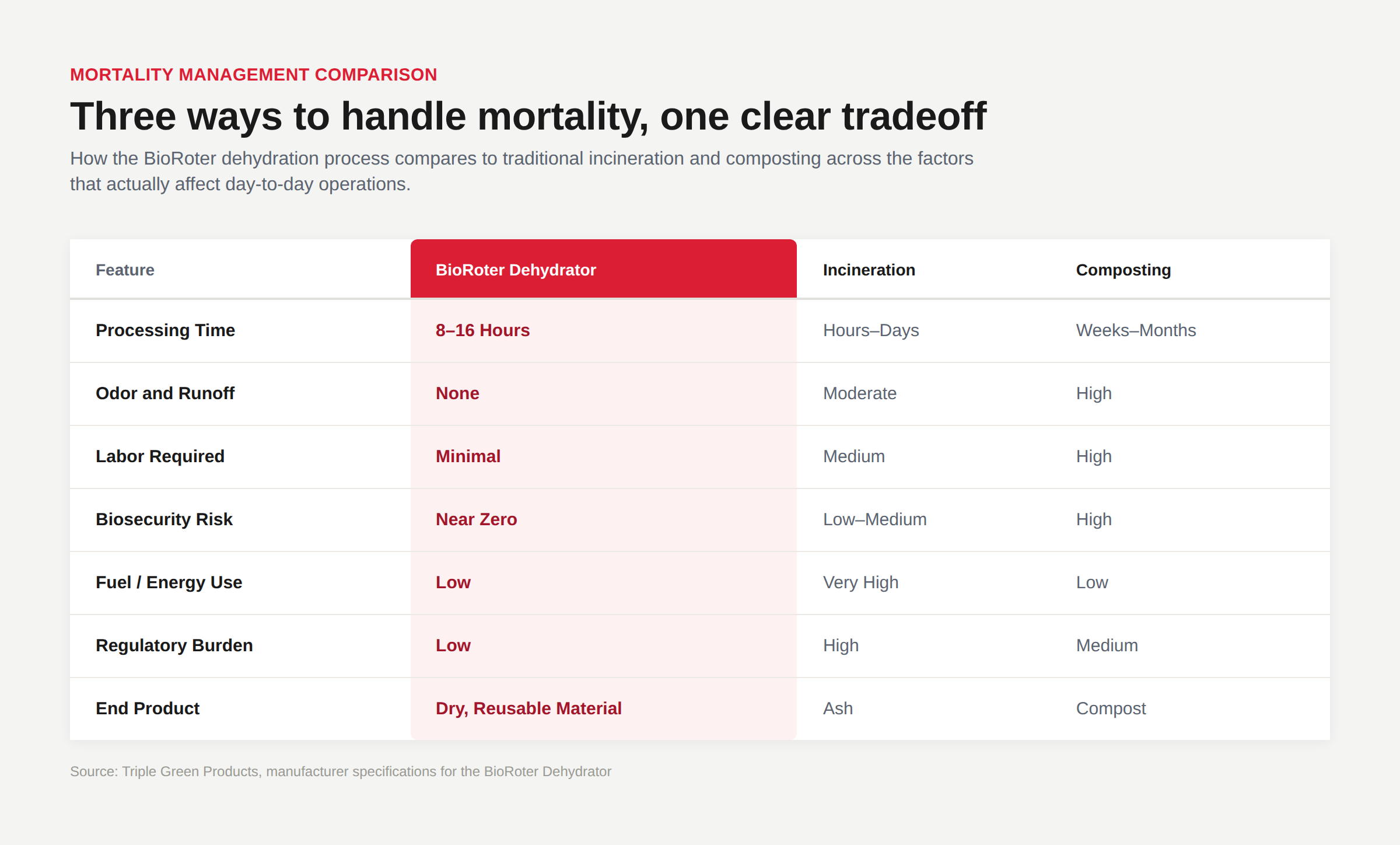
Composting has a real place in mortality management, but it asks a lot of an operation: weeks or months to fully break down a load, careful layering and turning, constant temperature monitoring, and the odor, runoff, and pest pressure that come with an active pile. Incineration solves the speed problem but introduces a different set of costs, since burning fuel fast to fully consume a carcass is expensive and the resulting smoke and emissions are exactly what trigger air quality permitting in many states.
The comparison below reflects Triple Green Products' own manufacturer specifications for the BioRoter against typical incineration and composting operations.
According to University of Nebraska-Lincoln Extension, rendering has historically been one of the most common disposal methods, but rendering facilities in many regions are becoming less accessible, and renderers frequently will not collect mortalities lost to diseases like avian influenza or PEDV due to disease transfer concerns. That gap is exactly where a dehydrator earns its place: it processes on-site, so a load never has to leave the farm to be handled safely.
How the BioRoter Dehydration Process Works
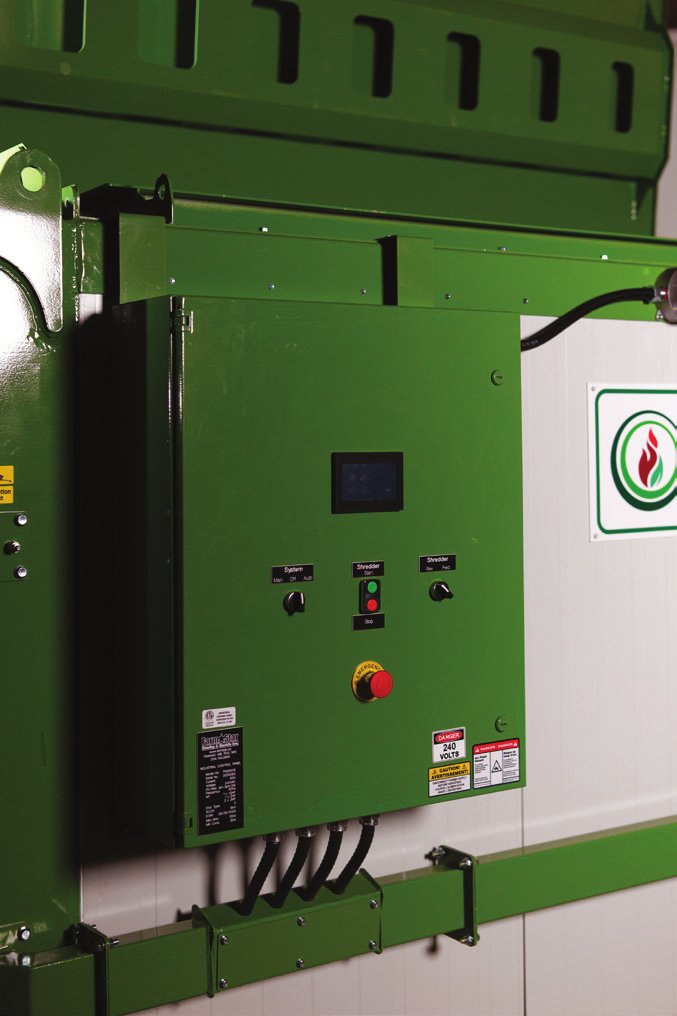
At the heart of every BioRoter is a PLC-controlled system that holds exact temperature and moisture targets throughout the cycle, so there is no guesswork about whether a load reached full sterilization.
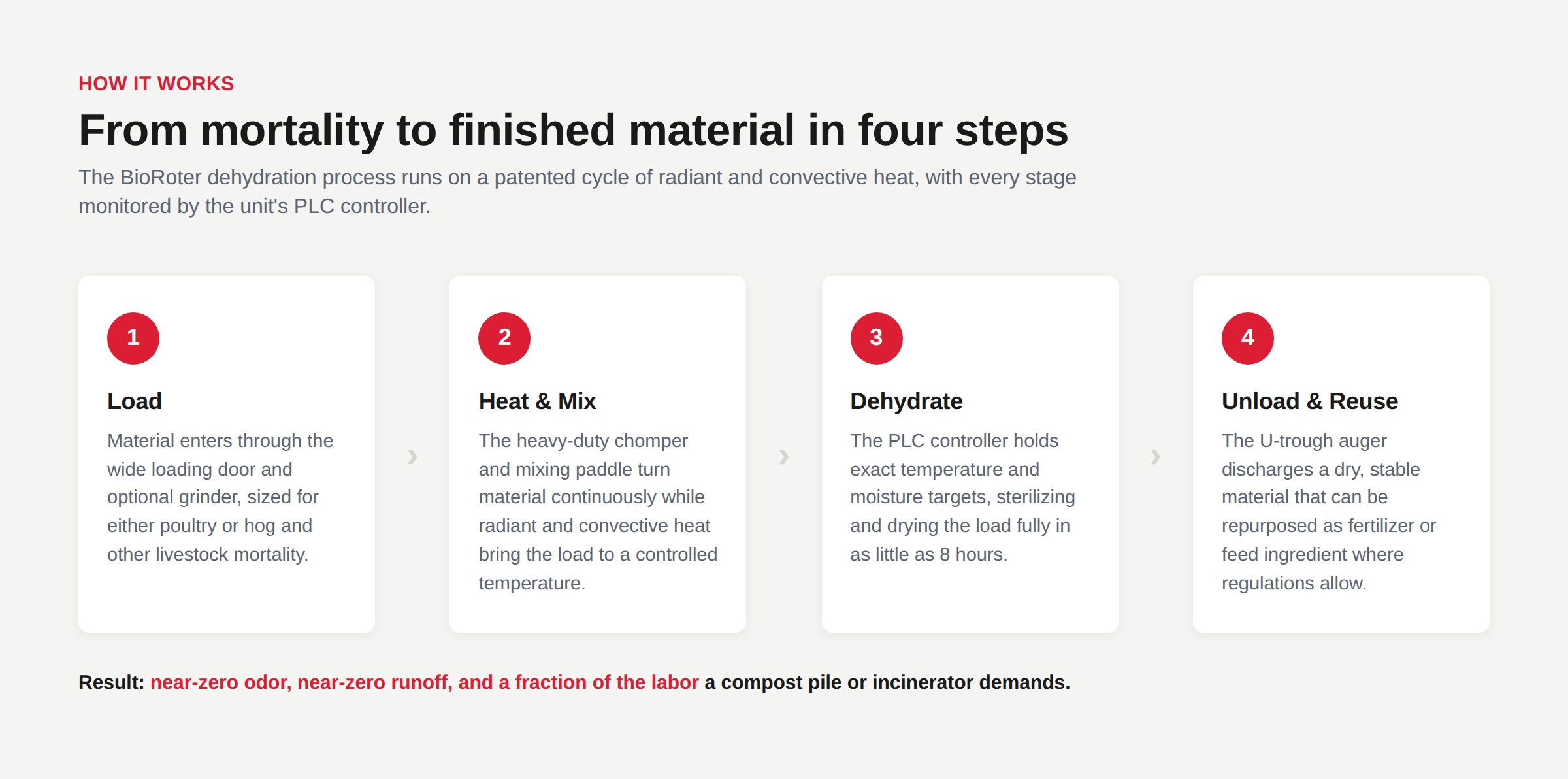
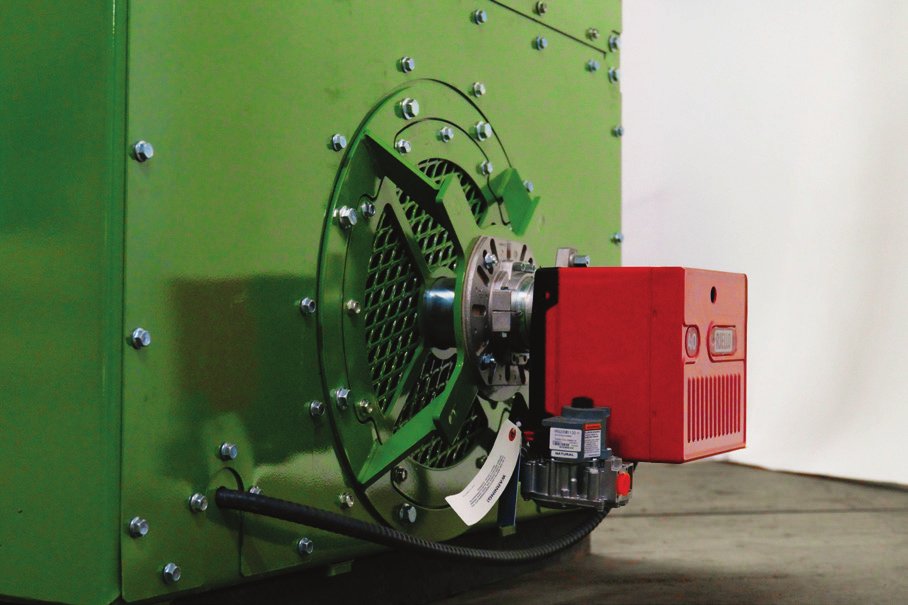
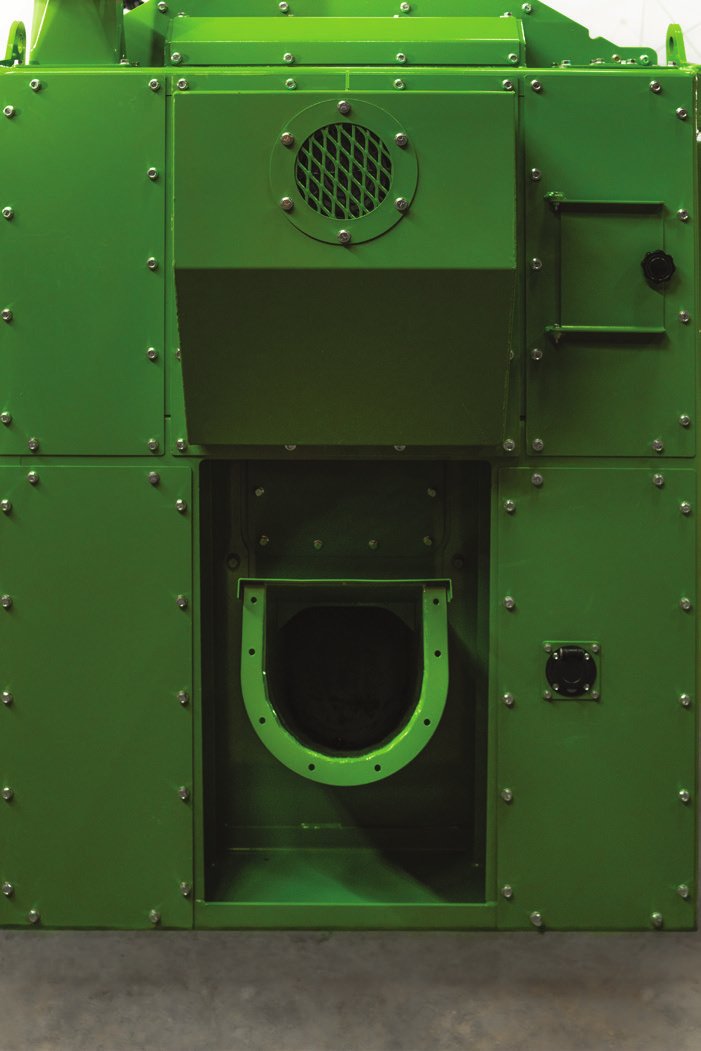
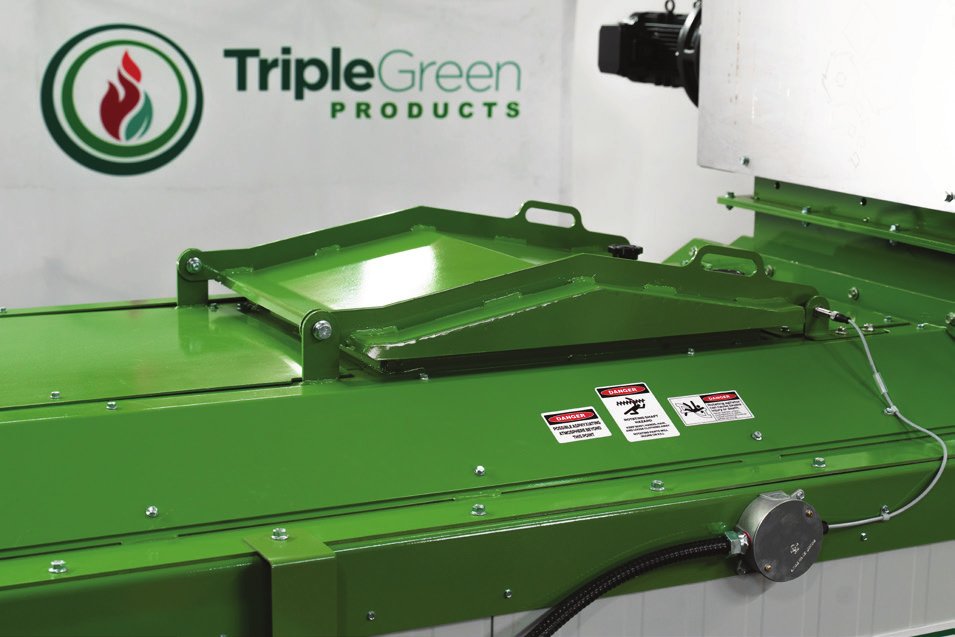
Material enters through a 7 foot wide loading door, wide enough to handle bulk loading without the bottlenecks a narrow opening creates. An optional grinder, available in a smaller configuration for poultry or a larger configuration for hog and other livestock, breaks material down before it reaches the drum. Inside, a heavy-duty chomper paddle and mixing paddle turn continuously on a reinforced center shaft, keeping material moving so heat reaches every part of the load evenly rather than leaving cold spots that undermine sterilization.
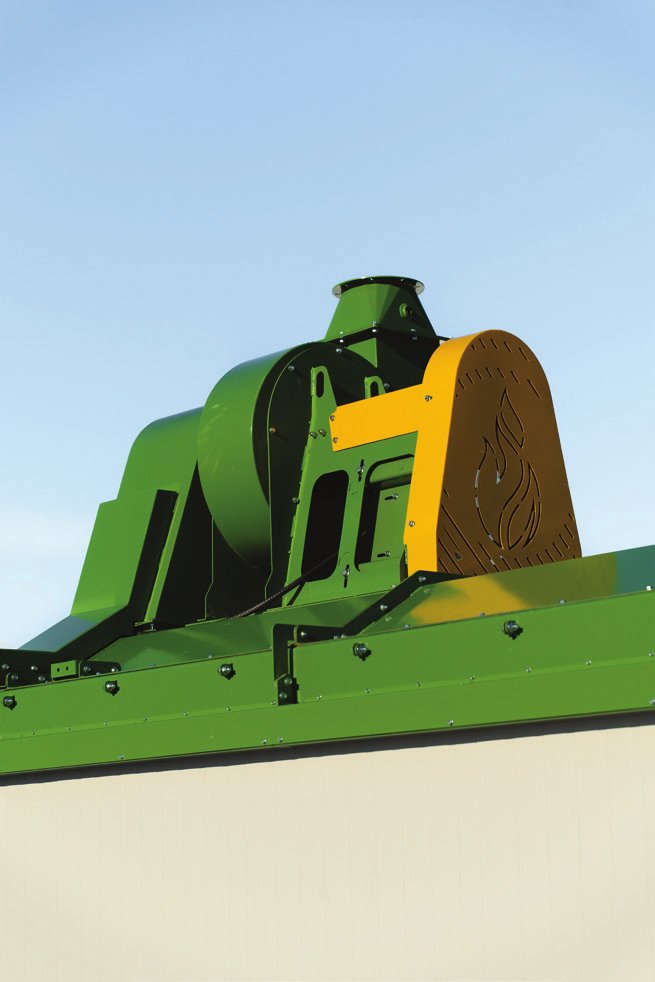
A variable speed exhaust fan with adjustable airflow manages moisture removal throughout the cycle, and the unit ships with a choice of three heat sources, propane, natural gas, or electric, so it can run on whatever utility setup a facility already has in place. Once the cycle finishes, a U-trough unload auger discharges the finished material, and an inspection door gives quick visual access without requiring a full teardown to check on a load mid-cycle.
Available Sizes
The BioRoter comes in four sizes, measured by inside vessel dimensions, so facilities can match unit capacity to actual daily mortality volume rather than over-buying capacity they will rarely use or under-buying and creating a processing bottleneck:
- 3' x 8' vessel, suited to smaller operations and lower daily volume
- 4' x 24' vessel, a common mid-range fit for growing poultry or hog operations
- 5' x 30' vessel, built for higher-volume daily processing
- 6' x 50' vessel, the largest configuration for high-throughput facilities
Sizing Your BioRoter to Actual Mortality Volume
The mistake that costs producers the most in the long run is sizing off herd or flock totals instead of actual daily mortality rate. A large poultry operation with a low baseline mortality rate may run comfortably on a smaller vessel most weeks, while a mid-size hog operation dealing with a disease event or a seasonal spike can overwhelm that same unit fast. The right way to size a BioRoter is to look at your average daily mortality first, then check that against your worst realistic week, not your best one.
It is also worth thinking about cycle frequency rather than just raw vessel capacity. A smaller unit run twice a day can process a similar daily volume to a larger unit run once, but the two options have different implications for labor scheduling and utility use. Working through that tradeoff before ordering is part of what a proper sizing conversation should cover, rather than just matching a vessel size to a headcount on a spec sheet.
Maintenance and Long-Term Reliability
A dehydrator that sits at the center of daily operations needs to be dependable in a way that goes beyond the sales pitch. The BioRoter's design keeps the maintenance list short and predictable: the stainless-steel hull and U-trough are built to resist the corrosive combination of moisture, ammonia, and cleaning chemicals that wear down lesser materials over a few seasons, and the chomper and mixing paddle assembly is built around a heavy-duty center shaft rather than lighter components that would need frequent replacement under continuous load.
Because the system is PLC-controlled, most day-to-day monitoring happens through the automated operating panel rather than manual checks, and remote monitoring support means a developing issue can often get caught before it turns into a missed cycle or an unplanned service call. That matters in mortality management specifically, since a dehydrator that is offline for even a day or two during a mortality spike puts an operation back into the exact bind this equipment is meant to solve.
Built for Reliable, Year-Round Operation
A mortality management system that only works in mild weather is not much of a system. The BioRoter's stainless-steel U-trough hull resists corrosion from the moisture and acidity that break down lesser materials over time, and the construction is rated to stand up to heavy daily demands regardless of season, so a facility is not left scrambling for a backup plan the first time temperatures swing hard in either direction.
Every unit ships backed by expert installation support, and remote monitoring is available so producers and their support team can catch a developing issue before it becomes a missed cycle. Training is built to be straightforward, since a system this central to daily operations needs to integrate into an existing workflow rather than demand that the workflow bend around it.
What Happens to the Finished Material
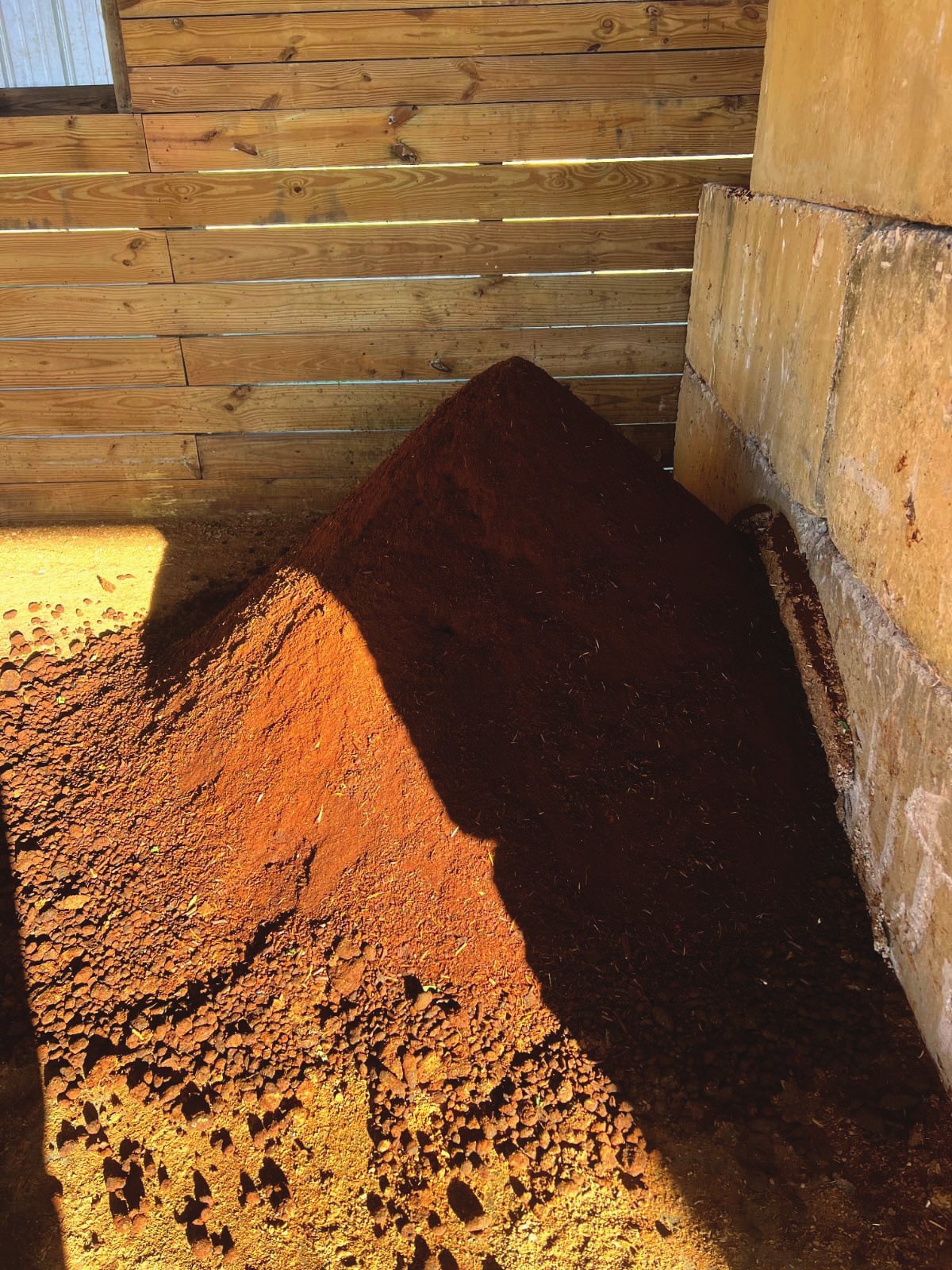
The result of a completed cycle is a consistent, safe, fully dehydrated material rather than the ash incineration leaves behind or the several-month timeline composting requires. That dried material can be repurposed as fertilizer, or in some cases as a feed ingredient where regulations allow, turning what used to be a pure cost center into a resource with actual value on the other end.
Regulatory Context for Mortality Management
Most states require producers to manage mortalities within a defined window, often 48 hours, in a manner that protects air and water quality and prevents disease transmission. Every disposal method carries its own regulatory profile, and mortality management plans typically need to account for that before a loss actually happens rather than during a scramble afterward. Our detailed breakdown of animal carcass disposal regulations covers the federal and state framework in more depth, and our comparison of composting animal waste on farms walks through what that process actually demands day to day if composting is still part of your plan.
Comparing the BioRoter to Other Mortality Management Options
The right equipment depends on your volume, your facility layout, and how much daily labor you can dedicate to the process. Bierman Equipment carries several approaches so you can compare them directly rather than committing to one before knowing what the alternatives actually look like in practice.
The BIOvator composting system remains a solid fit for operations that want an on-site composting process without building and managing windrows by hand, and biodigesters offer a different processing path entirely for operations set up to use them. For facilities that have relied on burning, our agricultural incinerators are still a dependable option where fast, complete destruction matters more than fuel cost. We go deeper on how two of those methods stack up in biodigesters vs. incinerators if you want to compare further before deciding where the BioRoter fits alongside them.
Why Add the BioRoter Through Bierman Equipment
Bierman Equipment brings the BioRoter into a lineup built around solving mortality and waste management problems from more than one angle, so a producer is not stuck fitting their operation around a single piece of equipment. Every configuration question, from unit sizing to heat source selection, gets answered by someone who understands how the rest of your facility's waste handling fits together, not just how one machine works in isolation.
You can see the rest of what we carry across Bierman Equipment's complete equipment lineup, and if you are ready to talk through sizing, heat source options, or how the BioRoter fits your daily volume, reach out to our team for a configuration built around your actual operation.
BioRoter Dehydrator Frequently Asked Questions
How long does a full BioRoter cycle take?
Processing time runs 8 to 16 hours depending on the unit size and the load, compared to hours or days for incineration and weeks to months for composting. Larger units processing heavier or wetter loads generally run toward the longer end of that range.
What can I do with the material after it comes out of the BioRoter?
The finished material is dry and stable, and it can be repurposed as fertilizer, or in some cases as a feed ingredient where regulations allow. That is a meaningful difference from incineration, which leaves only ash, or composting, which produces a bulkier finished product on a much longer timeline.
Which size BioRoter fits my operation?
The BioRoter comes in four vessel sizes, 3' x 8', 4' x 24', 5' x 30', and 6' x 50', measured by inside vessel dimension. The right size depends on your average and peak daily mortality volume rather than your overall herd or flock size, since a unit sized for average days can still bottleneck during a mortality spike.
Does the BioRoter work for both poultry and hog operations?
Yes. The unit accepts an optional grinder in either a smaller configuration sized for poultry or a larger configuration built for hog and other livestock, so the same base unit can be configured to match what your operation actually processes.
What heat source does the BioRoter use?
Units are available with a choice of three heat sources, propane, natural gas, or electric, so the system can run on whatever utility infrastructure your facility already has rather than requiring a new utility hookup just to support the equipment.
How does dehydration compare to composting for biosecurity?
Composting keeps material on-site, which is more biosecure than trucking carcasses off-farm, but an active compost pile still carries odor, runoff, and pest exposure while it works through a multi-week cycle. A dehydrator processes the same load in hours inside a sealed vessel, which keeps biosecurity risk close to zero throughout the entire cycle rather than for weeks at a stretch.
How much daily maintenance does a BioRoter require?
Day-to-day monitoring happens mostly through the automated operating panel, since the system is PLC-controlled and holds its own temperature and moisture targets without manual adjustment. Regular upkeep centers on inspecting the chomper and mixing paddle assembly and checking the stainless-steel hull and auger for wear, with remote monitoring support available to flag a developing issue before it causes a missed cycle.