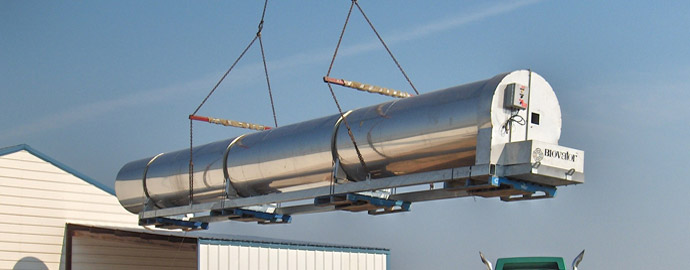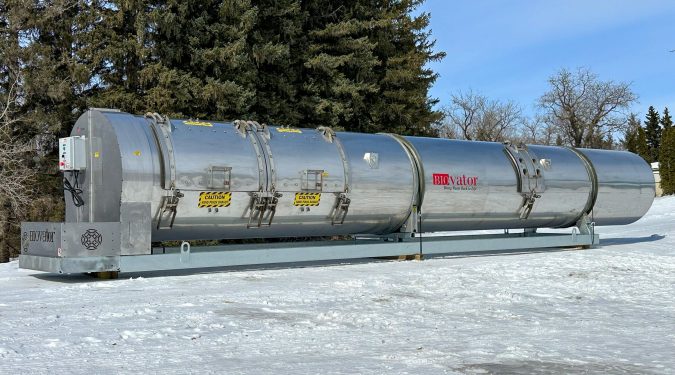


For farms managing livestock mortalities, poultry operations dealing with daily barn losses, and agricultural facilities generating steady volumes of organic waste, the BIOvator™ composting system offers a continuous, on-site solution that puts full control back in the hands of the operator. Manufactured by Nioex Systems Inc. and available through Bierman Equipment, the BIOvator™ in-vessel composter processes poultry, turkeys, hogs, and organic byproducts into finished compost in 4 to 14 days, compared to traditional methods that can take up to a year. It operates year-round, runs with minimal labor, and eliminates the biosecurity risks that come with third-party mortality pick-up services.
BIOvator™ Composting System for Farms and Livestock Operations
Managing mortalities and organic waste on a livestock operation is an ongoing responsibility that affects biosecurity, compliance, site cleanliness, and labor efficiency. Traditional approaches like open pile composting, windrow systems, or third-party pick-up each come with significant drawbacks. The BIOvator™ composting system addresses those drawbacks by keeping the entire composting process enclosed, automated, and on-site.
As part of a broader waste processing strategy, in-vessel composting with the BIOvator™ provides a fast, predictable, and biosecure alternative to off-site disposal. The system is recognized by the Natural Resources Conservation Service (NRCS) as an eligible product for subsidy under certain programs, which can offset the initial investment for qualifying operations.
“The payback ended up being barely over two years.” — Kent Paustian, Paustian Enterprises
How the BIOvator™ In-Vessel Composter Works
The BIOvator™ uses a continuous in-vessel composting process inside a fully enclosed rotating drum. Organic waste and carcasses are loaded into the vessel along with shavings, the drum rotates for a few hours each day, and microbial activity does the rest. The enclosed environment maintains the conditions needed for rapid decomposition, including controlled aeration, moisture balance, and consistent material movement.
Because the system operates continuously, new material can be added at any time without disrupting active composting. The result is a predictable, ongoing workflow rather than the batch-by-batch cycle of traditional pile composting. Finished compost exits the system in 4 to 14 days and can be used immediately as a soil enhancer, fertilizer, bedding material, or for lagoon bank erosion control.
Key operational characteristics include:
- Continuous loading with no need to wait between batches
- Enclosed vessel eliminates odor, wildlife intrusion, and pest access
- Processes material in 4 to 14 days versus up to a year with open methods
- Uses approximately half the shavings required for bin composting
- Operates year-round including cold weather conditions
- Minimal daily operator time required
- Reduces disease-causing organisms through heat generated in the composting process
What Can the BIOvator™ Composting System Process?
The BIOvator™ is designed for a broad range of livestock and agricultural organic waste. It handles everything from day-old chicks and small poultry mortalities to large sow carcasses, making it one of the most versatile mortality composting systems available for farm use.
Materials the BIOvator™ can process include:
- Poultry mortalities including broilers, layers, and turkeys
- Hog and swine mortalities at all production stages
- Cattle and large animal mortalities (size-dependent on model)
- Manure and barn bedding materials
- Crop residue and plant material
- Food waste and organic byproducts
- Fish and marine waste for aquaculture operations
- Other biodegradable organic waste streams
“Anything that dies here, we compost it. We compost everything on the farm from the weanling pigs after birth to the 500 and 600-pound sows to any of the other gilts in the operation.” — Henry Moore, Bobcat Farms
Operations dealing with bone-heavy waste or hides that are not compatible with composting may also want to review bone grinder options as a complementary processing step. For operations where incineration is the preferred mortality disposal method, agricultural incinerators are also available through Bierman Equipment.
Why Choose the BIOvator™ for Mortality and Organic Waste Management
Cost-Effective After Initial Investment
Once installed, the annual operating cost of the BIOvator™ composting system is minimal compared to ongoing disposal contracts, hauling fees, and labor tied to open composting management. Fuel and utility costs are low, shavings use is reduced by approximately half versus bin composting, and the finished compost produced has real reuse value on the farm.
For eligible operations, NRCS cost-share programs can offset a significant portion of the purchase price. The payback period reported by operators typically falls between two and three years, after which the system delivers ongoing savings with minimal recurring cost.
Biosecure On-Site Mortality Management
Third-party dead stock pick-up is one of the most significant biosecurity vulnerabilities for livestock operations. Every truck that enters the property to collect mortalities carries potential disease vectors from other farms. The BIOvator™ eliminates that risk entirely by keeping the entire mortality composting process on-site, enclosed, and under the operator’s control.
The sealed vessel prevents wildlife, insects, and rodents from accessing composting material, reducing secondary contamination risks that open pile systems cannot address.
“I no longer depend on off-farm dead stock pick-up, which I feel has definitely improved the biosecurity of my operation.” — Ted Neufeld, T & D Neufeld Farms
Year-Round Automated Operation
One of the most significant operational advantages of the BIOvator™ is its ability to compost year-round in virtually any climate. Winter composting is one of the most persistent challenges for farms using open or windrow methods, where cold temperatures dramatically slow decomposition and create management problems during the coldest months when mortality rates are often highest.
The BIOvator™ operates with a cold climate hoarding system option that recycles barn air to maintain composting temperatures even in harsh winter conditions. Daily operator involvement is minimal, reducing the time and labor tied to mortality management across all seasons.
“It’s just become a much more pleasant operation in dealing with the unpleasant side of livestock production.” — Mike Heppell, E and H Farms
Environmental and Site Benefits
Open composting and off-site disposal methods both carry environmental risks including leaching, ground contamination, and odor that affects neighbors and inspectors. The BIOvator™ composting system addresses each of these:
- Eliminates leaching and ground contamination associated with open pile composting
- Enclosed vessel contains odors during the decomposition process
- Recycled barn air option reduces heating energy consumption
- Finished compost can be reused as bedding, replacing a portion of new shavings
- Reduces the operation’s carbon footprint versus hauling and landfill disposal
- Supports cleaner water outcomes for operations near waterways or with runoff concerns
“We are convinced that we made the right decision in mortality management. I would recommend using a BIOvator™ to anyone.” — Dennis Stevenson, Sunnydale Farms
High-Quality Compost as a Usable End Product
Unlike incineration, which produces ash requiring further handling, the BIOvator™ produces high-quality compost that has direct value on the farm. Finished compost from the BIOvator™ can be applied as a soil enhancer to improve nutrient content and structure, used as a fertilizer for fields and pastures, incorporated back into barn bedding to replace a portion of new shavings, or applied to lagoon banks for erosion control.
This transforms what would otherwise be a disposal cost into a reusable resource, contributing to the system’s overall payback profile. For more context on best practices around on-farm composting, see our guide on how to compost animal waste on farms.
BIOvator™ vs Traditional Composting Methods
The differences between in-vessel composting with the BIOvator™ and traditional open or windrow composting are significant at a practical operational level:
- Processing time: BIOvator™ completes composting in 4 to 14 days versus up to a year with traditional piles
- Labor: BIOvator™ requires minimal daily operator time; traditional methods require frequent manual turning and pile management
- Biosecurity: BIOvator™ is fully enclosed; open piles attract wildlife, insects, and rodents
- Weather dependency: BIOvator™ operates year-round; open composting slows significantly in cold weather
- Odor: BIOvator™ contains odors inside the vessel; open piles create ongoing odor management challenges
- Space: BIOvator™ has a compact footprint compared to windrow systems requiring large outdoor areas
- Shavings use: BIOvator™ uses approximately half the shavings required for comparable bin composting
For operations evaluating whether composting or incineration is the better fit, our comparison article on biodigesters vs incinerators covers the key trade-offs. The biodigester page is also worth reviewing for operations generating high volumes of liquid organic waste where anaerobic digestion may be more appropriate than composting.
Applications for the BIOvator™ Composting System
Livestock and Poultry Operations
The BIOvator™ was originally developed to serve livestock and poultry operations and remains the strongest fit for those environments. Broiler and layer houses, turkey operations, hog production facilities, and mixed livestock farms all generate daily mortalities that must be managed in compliance with state regulations. The BIOvator™ provides a fully compliant, on-site solution that reduces handling, eliminates third-party pick-up dependency, and produces a usable compost byproduct.
Aquaculture and Fish Waste Processing
The BIOvator™ composting system is also effective for aquaculture operations managing fish and marine waste. Processing fish mortality and organic byproducts on-site supports cleaner water management, reduces hauling requirements, and improves biosecurity for sensitive aquaculture environments. For additional aquaculture waste management options, aquaculture incinerators are also available for operations where incineration is preferred.
Food Processing and Agricultural Facilities
Beyond traditional livestock applications, the BIOvator™ handles food waste, crop residuals, and organic processing byproducts generated by agricultural and food production facilities. Operations generating a steady stream of compostable organic material can benefit from the system’s continuous processing capability and compact site footprint. The Creeks Composters and Biodigesters are another option worth comparing for larger-scale food waste composting applications.
Frequently Asked Questions About the BIOvator™
What is the BIOvator™ composting system?
The BIOvator™ is a continuous in-vessel composting system manufactured by Nioex Systems Inc. It is designed to process livestock mortalities, manure, organic byproducts, and food waste on-site in an enclosed rotating drum, producing finished compost in 4 to 14 days.
How is the BIOvator™ different from traditional pile composting?
The BIOvator™ processes material in a fraction of the time, requires significantly less labor, operates year-round in all climates, eliminates wildlife and pest intrusion, contains odors inside the vessel, and uses approximately half the shavings of bin composting methods.
Is the BIOvator™ eligible for government subsidies?
In many cases, yes. The BIOvator™ is an eligible product for cost-share under the USDA Natural Resources Conservation Service (NRCS) in qualifying situations. Contact your local NRCS office or reach out to Bierman Equipment to discuss eligibility for your operation.
Can the BIOvator™ handle large animal mortalities?
Yes. The BIOvator™ is designed to handle a range of animal sizes, from day-old poultry to large sow carcasses weighing 500 to 600 pounds and above. Model selection determines the maximum input size and daily throughput capacity.
Does the BIOvator™ work in cold climates?
Yes. With the cold climate hoarding system option, the BIOvator™ recycles barn air to maintain composting temperatures year-round, making it effective even in harsh winter conditions where open composting is impractical.
What can the finished compost be used for?
Finished compost from the BIOvator™ can be used as a soil enhancer, fertilizer, partial replacement for new barn bedding shavings, or for erosion control on lagoon banks. It is a reusable resource that offsets part of the system’s ongoing operating cost.
How much operator time does the BIOvator™ require?
Daily operator involvement is minimal. Loading waste and shavings, running the drum for a few hours, and monitoring the process is all that is required. This significantly reduces the time spent on mortality and waste management compared to traditional composting or hauling arrangements.
Is the BIOvator™ suitable for aquaculture operations?
Yes. The BIOvator™ efficiently handles fish and marine waste, supporting cleaner water management and reducing hauling demands for aquaculture facilities.
Get the BIOvator™ Composting System Through Bierman Equipment
At Bierman Equipment, we supply the BIOvator™ to livestock operations, poultry farms, aquaculture facilities, and food processors across the United States. Whether you are replacing a third-party pick-up arrangement, upgrading from open pile composting, or building a complete on-site waste management system from scratch, we can help you evaluate whether the BIOvator™ is the right fit for your operation.
Call Tim directly at (712) 261-0137 or submit a request through our contact page and we will get back to you within one business day.