

Turning Manure and Bedding Into a Manageable Farm Resource
Animal waste composting on farms is one of the most practical ways to turn a daily disposal challenge into a more useful, manageable resource. With the right process, farms can reduce odors, manage nutrients more effectively, limit pathogen concerns, and create a stable end product that supports better soil performance and cleaner operations.
Whether you are handling manure, bedding, spoiled feed, or other organic byproducts, a well-structured composting program can improve day-to-day efficiency while supporting long-term sustainability goals. Farms looking for smarter processing systems can explore waste handling and agricultural equipment solutions from Bierman Equipment.
What Is Animal Waste Composting on Farms?
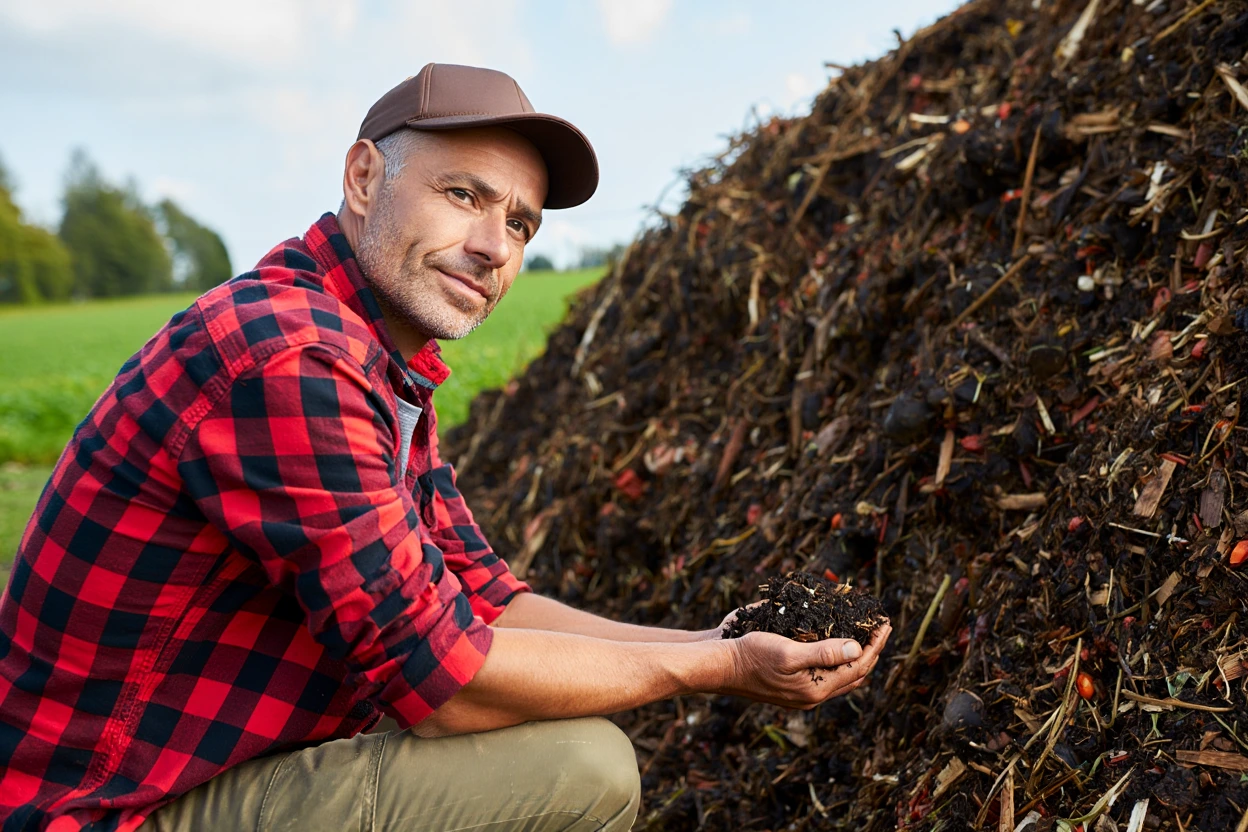
Animal waste composting is the controlled biological breakdown of manure, bedding, spoiled feed, and other organic farm materials into a stabilized product. Instead of allowing waste to sit in unmanaged piles or lagoons where odor, runoff, and handling problems can build up, composting creates a more structured system that supports environmental stewardship and practical farm management.
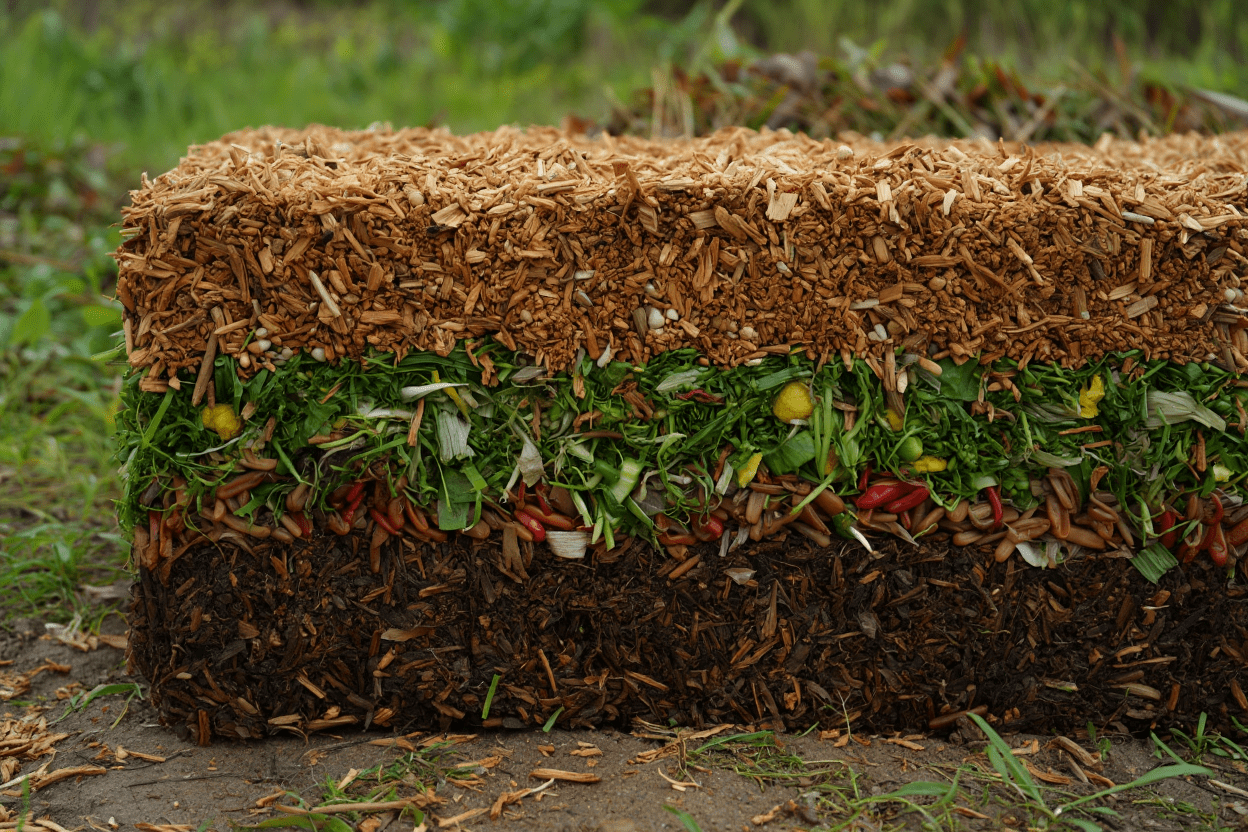
The process depends on balancing organic inputs so microorganisms can break material down efficiently. Manure often supplies nitrogen, while straw, sawdust, wood chips, and dry bedding provide carbon. When the mix is right, microbial activity generates heat that helps reduce pathogens and weed seeds while accelerating decomposition.
Why Farms Use Composting Systems
- Reduce the volume of raw waste
- Create a more uniform and easier-to-handle material
- Help control odors compared with unmanaged piles
- Support nutrient recycling on the farm
- Lower runoff risk when paired with proper site design
- Create a potential value-added product for soil improvement or landscaping
Different operations compost different waste streams. Dairy farms often manage manure and bedding together, horse farms compost stall waste, and beef, swine, goat, and sheep operations may compost manure solids and related byproducts depending on their setup and local requirements.
Choosing the Right Composting Site on the Farm
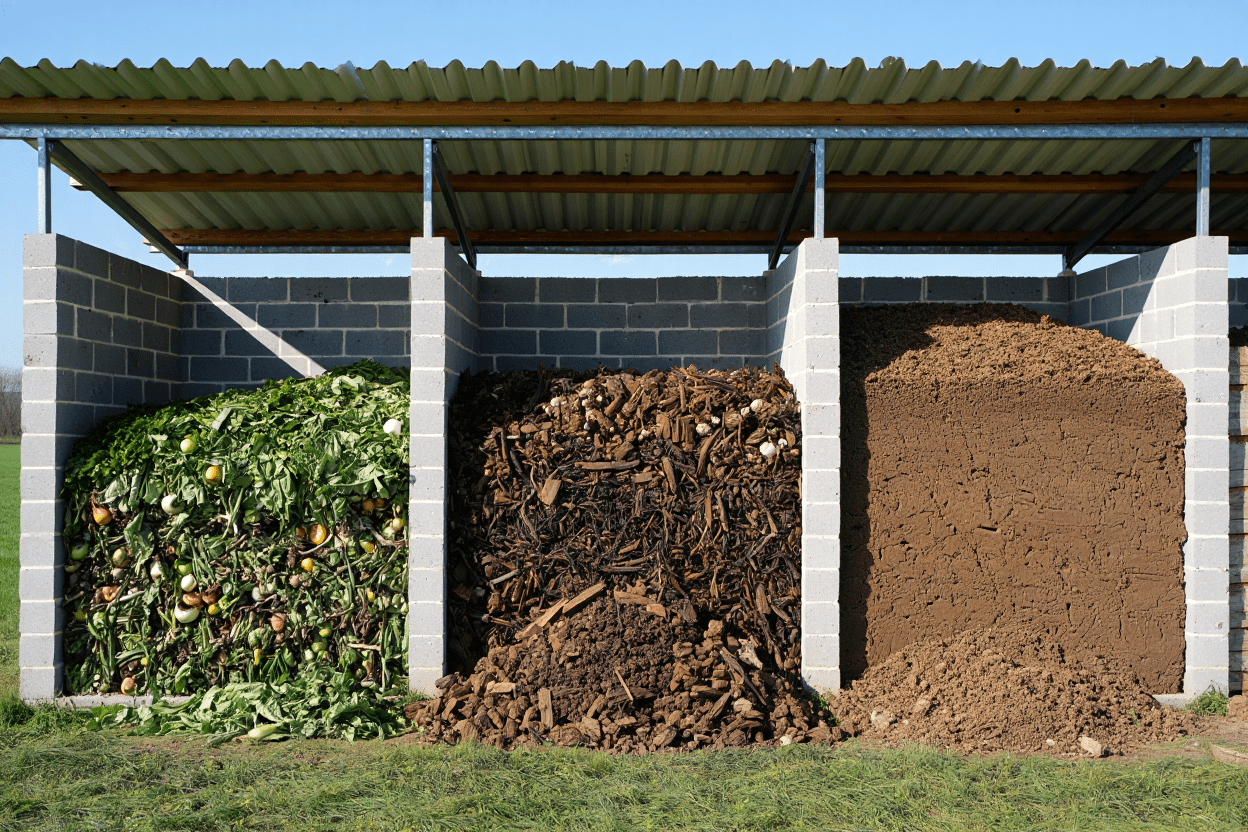
Site selection matters just as much as material balance. A composting area should have good drainage, easy equipment access, and adequate distance from wells, waterways, and neighboring properties. A stable surface such as compacted gravel or concrete helps reduce muddy conditions, supports better handling, and makes the system easier to manage throughout the year.
Proper siting is essential for worker efficiency, environmental protection, and compliance. Farms that want to improve operational flow often combine better site design with specialized equipment from providers like Biodigesters or other waste processing systems that reduce handling bottlenecks and improve consistency across the operation.
Using Waste Processing Solutions to Improve Composting
Efficient composting starts with better material handling. Farms that prepare, move, mix, and size materials consistently are far more likely to produce compost that heats correctly, cures evenly, and stays manageable throughout the process. Uneven particle size, poor mixing, and inconsistent moisture distribution can slow decomposition and increase labor demands.
Waste processing solutions help farms create a more repeatable composting workflow by improving throughput and reducing avoidable inefficiencies. This is especially valuable for farms working with large volumes of manure, bedding, and agricultural byproducts.
Material Preparation
- Separate solids from liquids where appropriate
- Blend manure with carbon-rich inputs before pile formation
- Shred bulky feedstocks for better uniformity
- Control moisture before piles become unstable
Process Improvement
- Screen finished compost for a cleaner final product
- Mechanize handling steps to reduce labor pressure
- Improve airflow and microbial access to material
- Create more consistency from batch to batch
For operations focused on long-term efficiency, composting is not just about disposal. It becomes part of a broader waste management strategy. Bierman Equipment offers systems that support material handling, organics processing, and farm productivity, including solutions like the Biovator for controlled organic waste processing and related agricultural applications.
Best Methods for Composting Livestock Waste
There is no one-size-fits-all composting system for livestock operations. The best option depends on herd size, labor availability, available space, climate, equipment access, and the type of manure or bedding being handled. Several proven methods are used across modern farms.
Animal Waste Composting on Farms: Choosing the Right Method
Windrow composting is one of the most common methods used on farms. Materials are formed into long rows that can be turned on a regular schedule to maintain oxygen levels and distribute heat and moisture evenly. This method works especially well for manure mixed with bedding or crop residues.
- Scalable for small and large farms
- Simple to implement with the right equipment
- Allows good temperature control when managed well
- Easy to monitor and adjust through regular turning
Static Pile Composting
In a static pile system, materials are stacked and left mostly undisturbed as decomposition progresses. Some systems rely on passive airflow, while others use perforated pipes or blowers to improve aeration. This method can work well when turning is difficult or when a more contained footprint is preferred.
Aerated Static Pile Composting
Aerated static pile systems use forced air to improve oxygen availability and support faster, more consistent decomposition. These systems are useful when process uniformity and odor control are priorities, though they usually require more infrastructure than basic windrows.
In-Vessel Composting
In-vessel systems use enclosed drums, containers, or vessels to create tightly controlled composting conditions. They offer precise control over temperature, aeration, and moisture, making them a strong option where footprint, biosecurity, or accelerated processing are major concerns.
Mortality Composting
For farms handling livestock mortalities, composting may be an approved disposal option when performed under proper guidelines. This process usually involves layering carcasses with carbon-rich materials such as sawdust, wood chips, or straw to absorb moisture, contain odors, and support decomposition. Local and state regulations should always be reviewed before implementation.
| Composting Method | Best Fit | Main Advantage | Main Consideration |
|---|---|---|---|
| Windrow | Farms with space and equipment access | Simple, scalable, easy to monitor | Needs regular turning and weather awareness |
| Static Pile | Lower-turn systems with prepared feedstocks | Reduced disturbance and contained footprint | Less flexibility after pile setup |
| Aerated Static Pile | Controlled composting programs | Improved airflow and consistency | Higher infrastructure cost |
| In-Vessel | Operations needing control and biosecurity | Precise environmental control | Greater capital investment |
| Mortality Composting | Approved livestock mortality management | On-farm disposal option | Must follow regulations and protocols |
Temperature and Moisture Control in Animal Waste Composting
Temperature and moisture are two of the most important factors in a successful composting program. If either one moves outside the right range, biological performance drops and the process becomes slower, less stable, and more likely to create odor or handling problems.
Why Temperature Matters
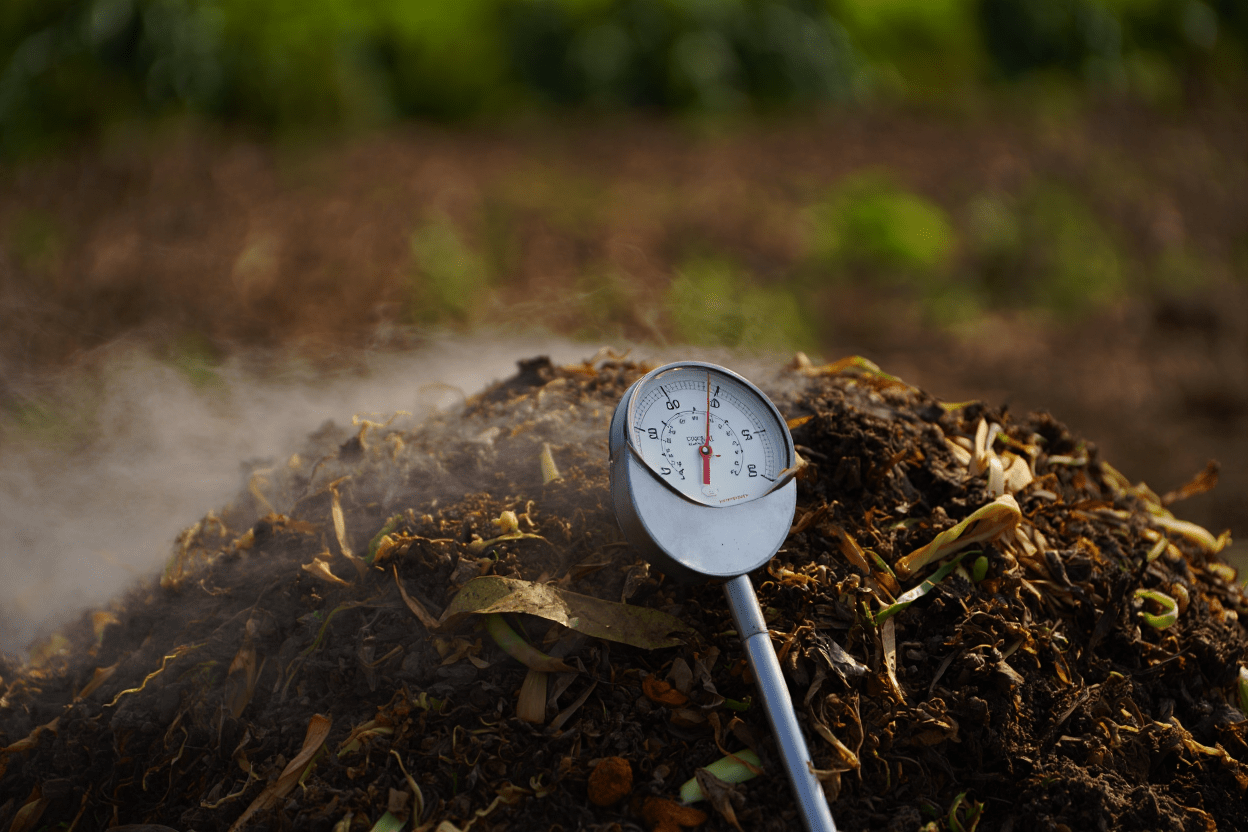
A healthy compost pile heats up as microorganisms consume organic matter. Sustained elevated temperatures help reduce harmful organisms and weed seeds, which is why active monitoring is essential. If temperatures stay too low, the pile may need more nitrogen, moisture, or aeration. If temperatures get too high, turning may be needed to protect beneficial microbial activity.
Why Moisture Matters
Compost that is too dry will not support adequate biological activity. Compost that is too wet can become compacted, lose oxygen, and develop strong odors. A good target is a damp but not saturated texture similar to a wrung-out sponge.
- Monitor temperatures regularly with a compost thermometer
- Check moisture levels during mixing and turning
- Add dry carbon materials if piles become too wet
- Add water carefully if piles become too dry
- Turn windrows when temperatures plateau or oxygen drops
- Protect piles from excessive rainfall where possible
Equipment That Improves Composting Efficiency
The right equipment can make a major difference in composting speed, consistency, and labor efficiency. For farms handling larger waste volumes, equipment often separates a composting system that is merely workable from one that becomes a reliable part of daily operations.
Common Equipment Used in Composting Systems
- Loaders and skid steers for moving raw material, forming piles, and turning smaller rows
- Manure handling systems for collecting and transporting waste efficiently
- Shredders or grinders for bulky organic matter and more uniform blends
- Screeners for producing a cleaner finished compost product
- Conveyors and feed systems for moving materials through a process line
- Aeration equipment for static pile and controlled-air setups
- Moisture management tools such as water systems or pile covers
- Specialized compost turners for large-scale windrow operations
Equipment should be selected based on throughput, available labor, site layout, and the intended use of the finished compost. Farms evaluating systems for waste handling, screening, or organics processing can review Bierman Equipment’s broader equipment attachments lineup to identify options that better match their workflow.
Common Challenges in Composting Animal Waste
Composting delivers strong benefits, but farms still need to manage common issues that can affect performance throughout the year. The most successful operations treat composting as a managed system, not a passive waste pile.
Poor Carbon-to-Nitrogen Balance
Fresh manure is often nitrogen-rich. Without enough carbon material, piles can become wet, dense, and odorous. Straw, bedding, sawdust, wood chips, and crop residues help restore structure and balance.
Excess Moisture
Rainfall, liquid content, and poor drainage can saturate a pile, reduce airflow, and slow decomposition. A well-drained pad and proper blending help reduce this problem.
Insufficient Aeration
Composting microorganisms need oxygen. If piles are compacted or not turned often enough, oxygen levels fall and performance declines.
Inconsistent Temperatures
Temperature issues often point to poor pile size, uneven mixing, low moisture, or an unbalanced nutrient profile. Regular monitoring makes these problems easier to correct.
Odor Management
Odors often result from poor oxygen flow, excess moisture, or an imbalanced feedstock mix. Better structure and routine monitoring can significantly reduce odor concerns.
Labor Demands and Seasonal Weather
Composting takes labor for collection, blending, monitoring, turning, and handling finished material. Weather also affects the process. Cold conditions can slow microbial activity, heavy rains can saturate piles, and hot dry periods can pull out moisture too quickly.
For general composting guidance and broader best practices, the U.S. Environmental Protection Agency’s composting resources outline the process, benefits, and legal basics in more depth.
Frequently Asked Questions
How long does animal waste take to compost?
Most farm composting systems take several weeks to several months depending on the materials used, turning frequency, moisture conditions, and temperature management.
Can all livestock manure be composted?
Most livestock manure can be composted when it is balanced with carbon-rich material and managed correctly throughout the process.
Does composting reduce pathogens?
Yes. Proper composting temperatures and active pile management help reduce many pathogens and support a more stable finished product.
What carbon materials work best with manure?
Common carbon sources include straw, sawdust, wood chips, dry bedding, and crop residues. The best choice depends on availability, moisture content, and the type of manure being handled.
Is composting better than stockpiling manure?
In most cases, yes. Composting is more controlled, reduces odor and volume, and creates a more stable end product that is easier to handle and reuse.
Do farms need special equipment to compost animal waste?
Not always. Smaller farms may begin with basic tools, but larger operations often benefit from specialized equipment for handling, turning, shredding, screening, and moisture control.
Can composted manure be applied to fields?
Yes. Finished compost is often applied to fields, gardens, and landscape areas as a soil amendment based on nutrient planning and agronomic needs.
How can farms improve composting efficiency?
They can improve efficiency by using consistent feedstock blends, monitoring temperature and moisture closely, and investing in equipment that streamlines handling and processing.
Take the Next Step with Bierman Equipment
For farms looking to improve the way they manage manure, organic byproducts, and composting workflows, the right equipment can make a measurable difference. Bierman Equipment delivers innovative solutions that help agricultural operations strengthen efficiency, functionality, and long-term performance.
If you are planning a better waste handling process, upgrading an existing composting setup, or comparing equipment options for organics management, start with Bierman Equipment’s background in agricultural waste systems and connect with our equipment specialists to discuss the right fit for your operation.