

For farms, food processing operations, meat processors, and commercial facilities managing steady volumes of organic waste, biodigesters offer one of the most efficient and controllable on-site processing solutions available. Rather than relying on storage, hauling, or open disposal methods, a biodigester actively breaks down organic material through a biological process that reduces waste volume, controls odor, and improves the overall management of organic residuals. At Bierman Equipment, we supply biodigester systems suited to agricultural operations and food processing facilities of varying sizes across the United States.
Biodigesters for Farms and Food Waste Management
Managing organic waste on a farm or in a food production environment is an ongoing operational challenge. Manure, food scraps, animal byproducts, and other biodegradable materials accumulate continuously, and the way they are handled affects labor requirements, site cleanliness, odor conditions, and regulatory standing. Waste processing solutions that include biodigestion give operations a more predictable and manageable path forward compared to traditional storage and hauling approaches.
Biodigesters convert organic waste through a controlled biological process, producing outputs that are easier to handle downstream and significantly reducing the raw waste volume that needs to be managed on site. For operations that deal with protein-heavy waste such as meat processing byproducts, poultry scraps, or fish waste, biodigesters can process material that composting systems handle less effectively.
How Biodigesters Process Organic Waste
A biodigester functions by introducing organic waste into a controlled environment where microorganisms break the material down. In aerobic systems, oxygen supports decomposition and the output is converted primarily to water and carbon dioxide, which can be safely discharged. In anaerobic systems, the process occurs without oxygen, producing biogas and digestate as outputs.
The LFC biodigester systems we carry use aerobic digestion with a rotating internal arm that continuously mixes waste, oxygen, and microorganisms to accelerate decomposition. Water is injected to maintain the correct moisture balance, and decomposed material is flushed out as grey water safe for standard sewage discharge. The process runs continuously, meaning operators can add material at any time without waiting for a processing cycle to complete.
Key outputs and process characteristics include:
- Significant reduction in raw organic waste volume on site
- Continuous processing with no need to empty the machine
- Discharge safe for standard sewage or drain systems
- Aerobic decomposition that eliminates odor during processing
- Automatic weight monitoring and usage tracking via touchscreen interface
- Remote diagnostics and cloud software connectivity
- All stainless steel construction with a three-year warranty
What Materials Can Biodigesters Handle?
LFC biodigester systems are designed specifically for protein-rich and food-based organic waste, making them a strong fit for meat processing, butcher services, food manufacturing, and food service operations. Proteins such as meat and poultry break down within approximately 24 hours. The system can also process food scraps including eggshells, fish bones, and tendons.
Note that full bones and beef hides are not compatible with LFC biodigester systems. Operations dealing with those materials may want to review bone grinder and bone and aggregate crusher options for that portion of their waste stream.
Compatible materials include:
- Meat and poultry byproducts and trim waste
- Fish and seafood waste
- Food scraps including eggshells, tendons, and soft bones
- Spoiled or expired food products
- Organic kitchen and cafeteria waste
- Bakery and food distribution residuals
- Aquaculture and fishery processing waste
LFC Biodigester Systems Available Through Bierman Equipment
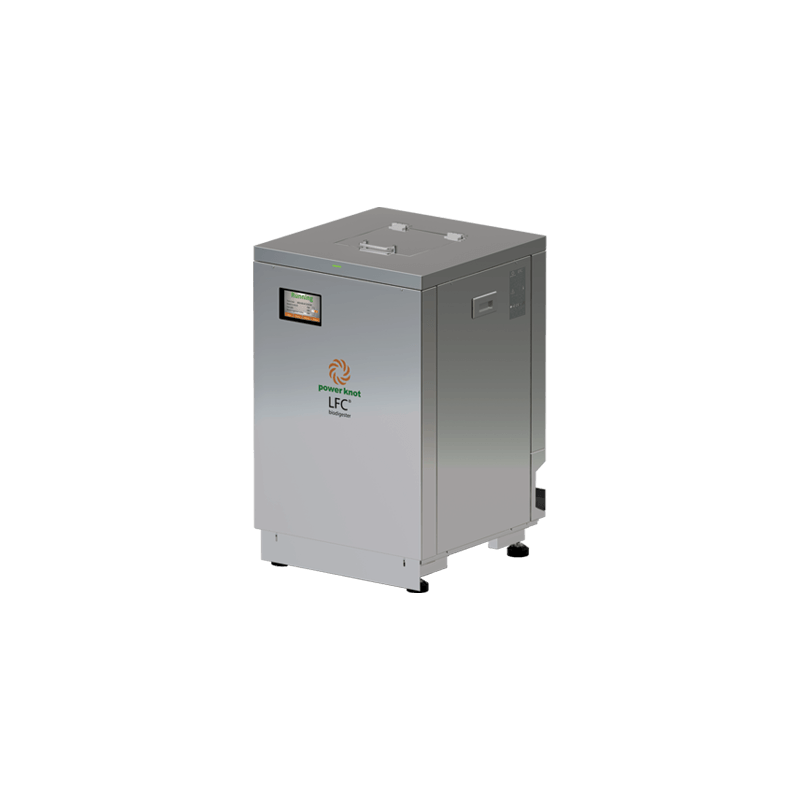
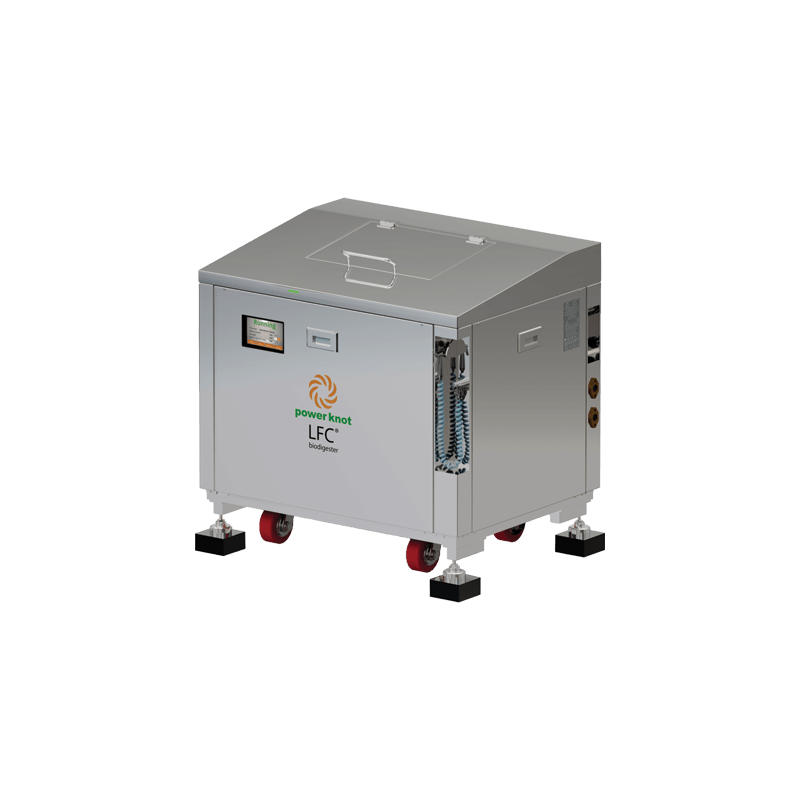
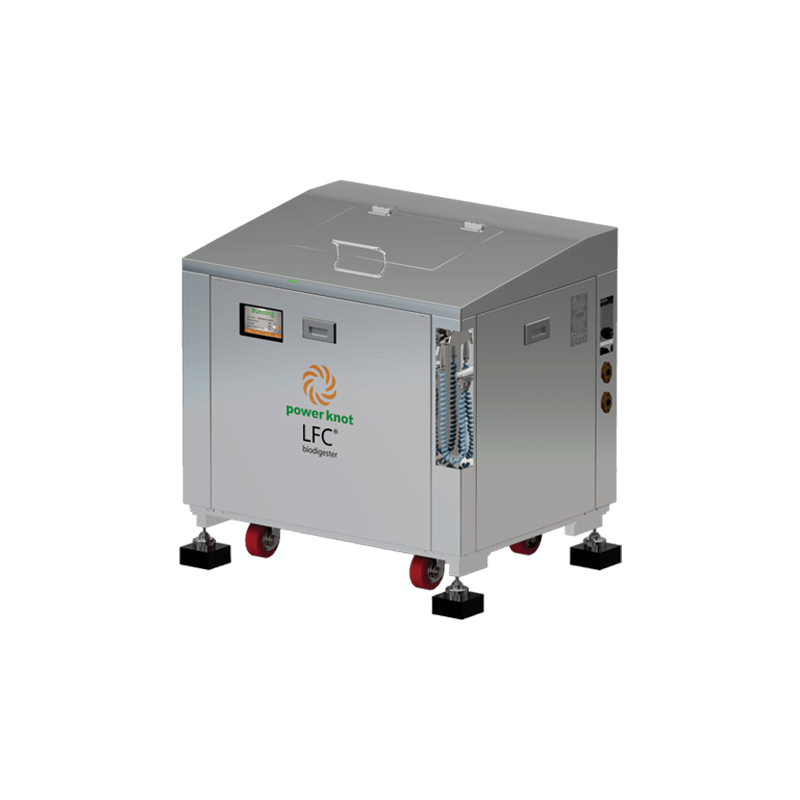
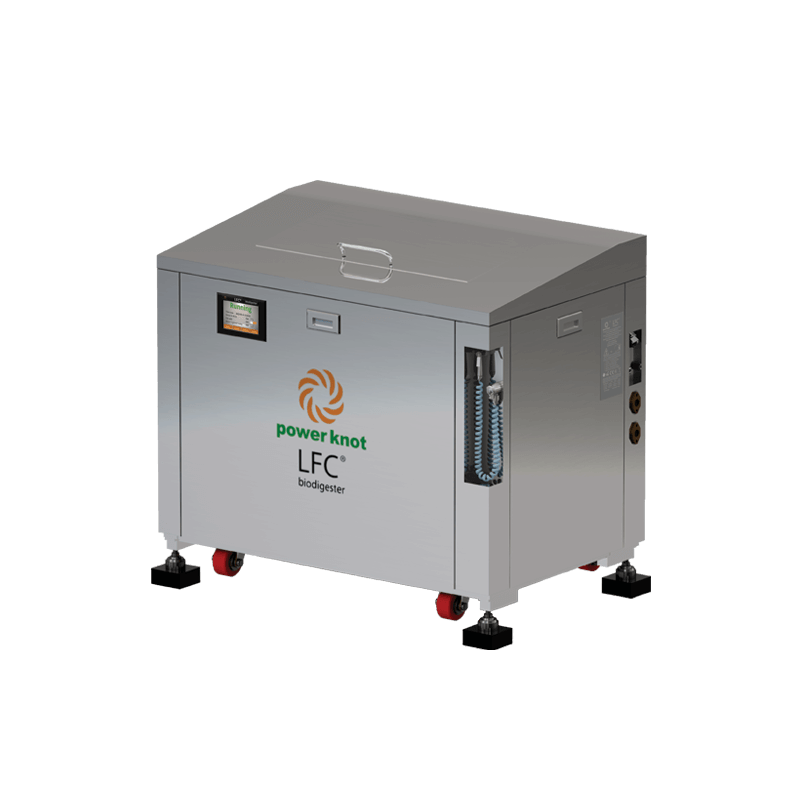
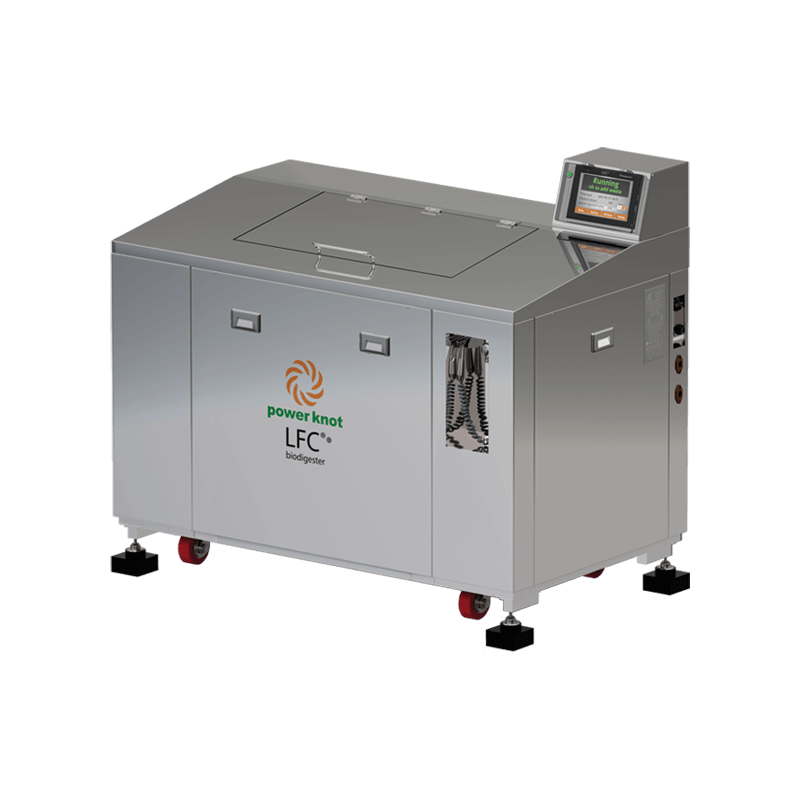
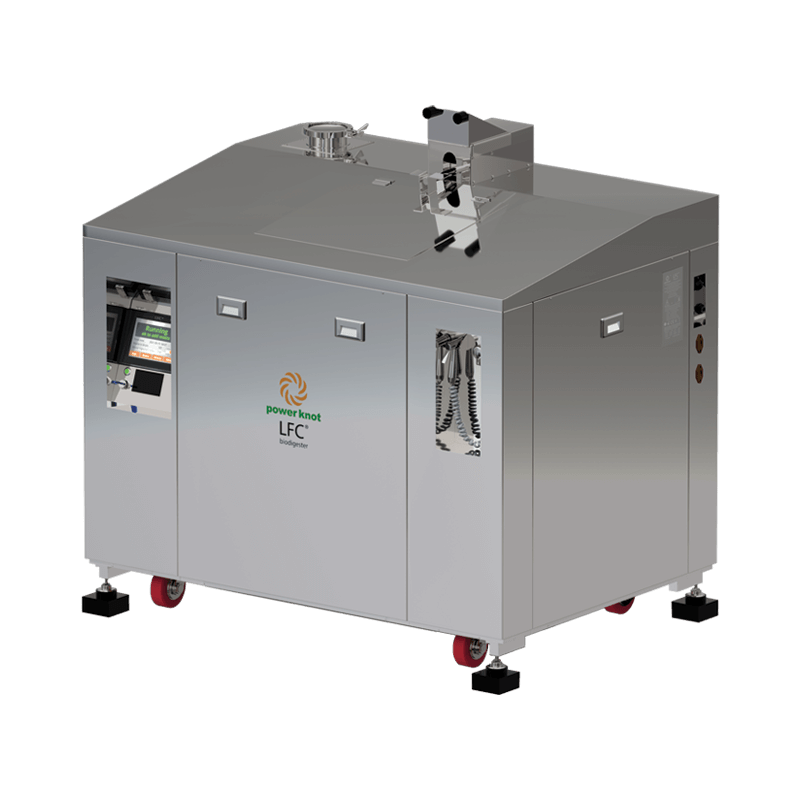
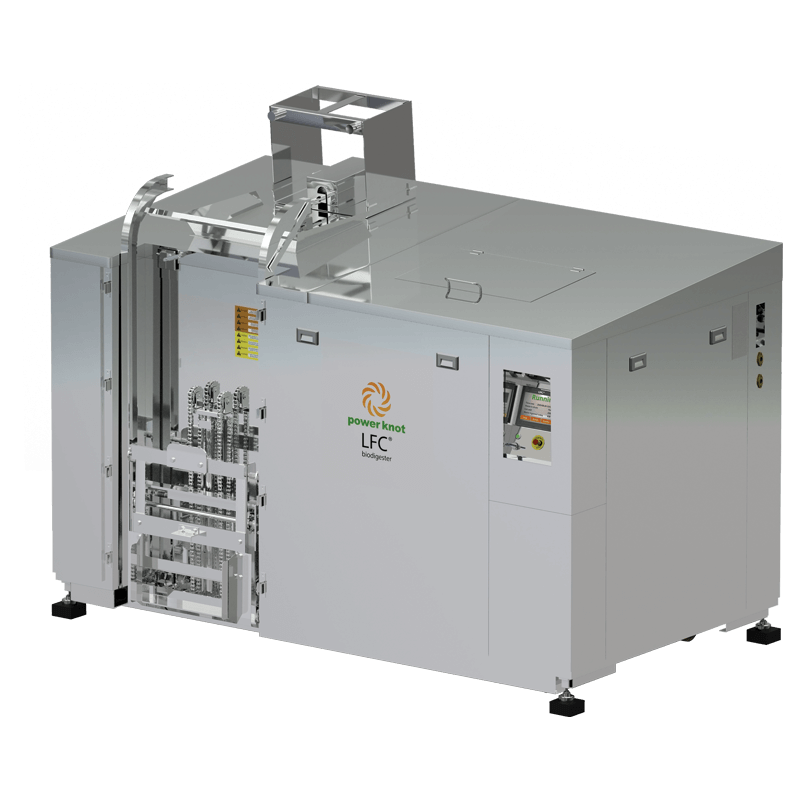
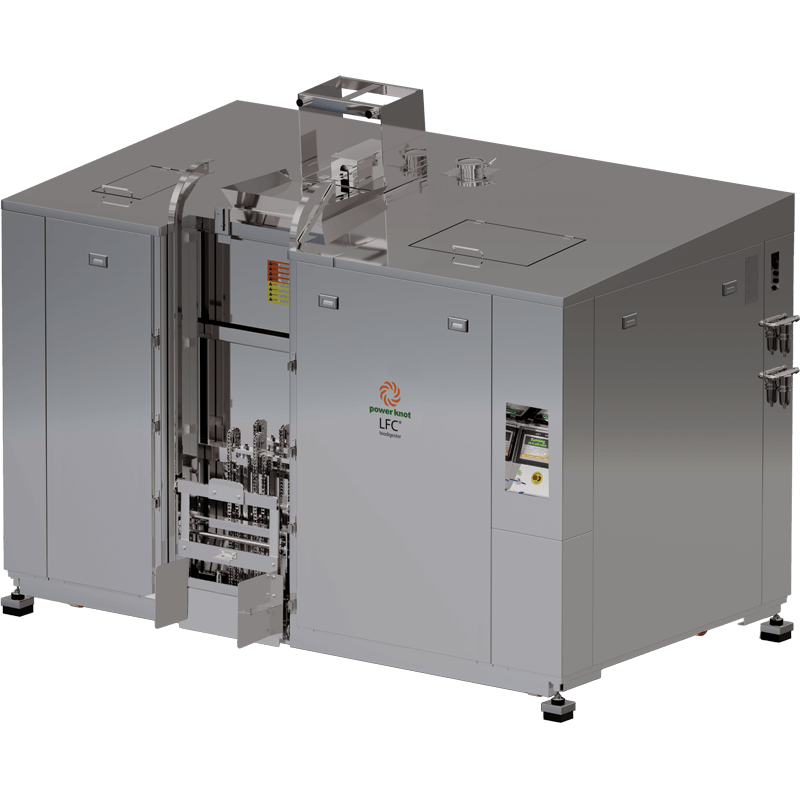
The LFC biodigester is an automatic composting machine designed for continuous operation in commercial and industrial environments. It functions as a stainless steel biological processing unit where microorganisms digest organic material into grey water that drains safely. The system is designed to operate inside a kitchen or work area, requires no special infrastructure beyond a water connection and drain, and can be operated by existing staff without specialized training.
LFC Biodigester Features
- Continuous operation with load-at-any-time capability
- All waste converted to water with no machine emptying required
- Aerobic digestion process eliminates processing odors
- Color touchscreen interface for monitoring and control
- Continuous weight monitoring and usage recording
- Automatic NFC-controlled doors on larger models for waste categorization
- Comprehensive onboard diagnostics and service scheduling
- Cloud software connectivity for remote monitoring and support
- All stainless steel construction for durability and sanitation
- Three-year warranty subject to terms
- Multiple model sizes for different throughput requirements
Benefits of LFC Biodigester Systems
- Significantly reduces costs associated with off-site food waste disposal
- Reduces carbon footprint and supports diversion from landfill
- Eliminates flies, rodents, and odors associated with waste bins
- Reduces the size, quantity, and handling demands of trash containers
- Saves employee time and reduces injury risk from carrying waste outdoors
- Allows waste weighing and disposal in a single step
- Supports zero waste reporting and CO2 equivalent diversion tracking
- Payback typically achieved within 6 to 24 months
- Cloud support simplifies remote service and diagnostics
Industries and Applications for LFC Biodigesters
LFC biodigester systems are used across a wide range of food-related commercial and institutional environments. Common applications include:
- Meat processing plants and butcher operations
- Hotels, resorts, and hospitality facilities
- Corporate and university cafeterias
- Restaurants and highway service centers
- Hospitals and nursing homes
- Theme parks, convention centers, and sports stadiums
- Supermarkets and food distribution centers
- Bakeries and catering operations
- Military canteens and correctional facilities
- Aquaculture and fisheries
- Cruise ships, remote camps, and island properties
For food processing facilities with broader waste stream challenges beyond organic byproducts, our article on food waste disposal solutions for processing plants covers additional equipment options worth reviewing.
Types of Biodigesters for Agricultural Operations
Beyond the LFC aerobic systems, agricultural operations managing large-scale manure and organic waste streams may benefit from anaerobic biodigester configurations. Different designs suit different waste characteristics and operational goals. Understanding the options helps ensure the selected system matches your actual waste stream.
Covered Lagoon Digesters
Best suited for operations generating high volumes of liquid waste such as dairy and hog operations with flush-based manure management systems. A flexible cover captures biogas from an existing lagoon, making it a lower-cost option for operations that already have lagoon infrastructure.
Plug Flow Digesters
Designed for thicker manure slurries with higher solids content, typically from dairy or beef cattle operations. Waste moves through a long tank in a plug formation, allowing for consistent retention times and predictable biogas output.
Complete Mix Digesters
Heated tanks that mechanically mix waste to maintain uniform conditions throughout the digestion process. Well suited for operations with variable waste characteristics or facilities that want consistent, controlled processing performance.
Dry Digestion Systems
Designed for higher-solids organic materials such as food waste, crop residue, or manure with low moisture content. These systems operate without the liquid handling infrastructure required by wet digestion configurations, making them suitable for operations where water management is a constraint.
For operations evaluating digestion against alternative disposal methods, our comparison article on biodigesters vs incinerators covers the trade-offs in practical detail. Operations dealing with carcass disposal alongside organic waste should also review agricultural incineration options as a complementary system.
What to Consider Before Installing a Biodigester
Selecting and sizing a biodigester correctly requires a clear picture of your waste stream, operational constraints, and goals. Undersized systems create bottlenecks; oversized systems waste capital. The following factors should be evaluated before making a purchase decision.
Waste Type and Physical Characteristics
Moisture content, solids concentration, protein content, and contamination levels all affect which system design is appropriate. LFC aerobic systems are optimized for food and protein waste; anaerobic systems handle manure and mixed organics more effectively.
Volume and Daily Throughput
System capacity must be sized for both average daily volume and peak production periods. Multiple model sizes are available to match throughput requirements across a wide range of facility scales.
Available Space and Installation Requirements
LFC systems can be installed inside a kitchen or work area with standard drain and water connections. Larger anaerobic systems require more site space and may involve civil or structural work. The system must fit within your facility’s physical and operational constraints.
Energy and Output Goals
Aerobic systems convert waste to water with minimal energy output. Anaerobic systems can capture biogas for heat or electricity generation. If energy recovery is a priority, anaerobic digestion with biogas capture is the appropriate path.
Labor and Maintenance Resources
LFC biodigesters are designed for operation by existing staff with minimal training. Cloud diagnostics and remote service support reduce the burden on in-house maintenance teams. Larger agricultural systems require more infrastructure management and periodic servicing.
Compliance and Permitting
Review local regulations around organic waste disposal, nutrient management, wastewater discharge, and environmental permitting before installation. The EPA’s AgSTAR program provides guidance on anaerobic digestion for farms and the associated permitting landscape.
Biodigesters and the Broader Waste Processing Picture
For most operations, biodigesters are one component of a broader waste management approach rather than a complete standalone solution. Organic food waste and soft byproducts go into the biodigester; harder materials like bone go to a grinder or crusher; carcasses and mortalities may go to an incinerator. A well-designed system accounts for all waste streams and routes each material to the appropriate equipment.
Bierman Equipment carries equipment across all of these categories. The BIOvator and Creeks Composters handle composting for operations where that approach is preferred. The waste processing solutions overview covers the full range of what is available and how different systems work together. For on-farm composting guidance, our article on how to compost animal waste on farms is a useful starting point.
Frequently Asked Questions About Biodigesters
What are biodigesters and how do they work?
Biodigesters are systems that break down organic waste using microorganisms, either in an oxygen-free anaerobic environment or an aerobic environment with oxygen. The process reduces waste volume, controls odor, and produces outputs such as water, biogas, or digestate depending on the system type.
What materials can biodigesters process?
LFC aerobic biodigesters handle meat, poultry, fish, food scraps, and soft organic waste. Anaerobic agricultural systems process manure, crop residue, food waste, and mixed organic materials. Full bones and beef hides are not compatible with LFC systems.
How do biodigesters help farms and food processing facilities?
They reduce raw organic waste volume on site, improve odor management, lower hauling and disposal costs, support compliance with waste management regulations, and create a more organized and efficient workflow for handling organic residuals.
Do biodigesters produce usable energy?
Anaerobic biodigesters produce biogas that can be captured and used for heat or electricity generation. Aerobic systems like the LFC convert waste to water without biogas capture, prioritizing volume reduction and simplicity over energy recovery.
Are biodigesters only suitable for large operations?
No. LFC biodigesters are available in multiple model sizes suited to everything from a single restaurant kitchen to a large food processing facility. Anaerobic agricultural systems also scale across a wide range of operational sizes.
What is digestate and what can it be used for?
Digestate is the stabilized material remaining after anaerobic digestion. Depending on its composition and local regulations, it can be applied to land as a nutrient source, further processed, or used as a soil amendment.
How long does it take for a biodigester to pay for itself?
For LFC aerobic systems, payback is typically achieved within 6 to 24 months depending on current disposal costs, waste volume, and labor savings. Larger anaerobic systems with biogas capture may have longer payback periods but greater long-term returns through energy generation.
What should I consider before purchasing a biodigester?
Waste type and volume, available space, labor capacity, energy goals, and local compliance requirements are the key factors. The best starting point is a direct conversation about your specific waste stream and operational setup.
Talk With Bierman Equipment About Biodigesters
At Bierman Equipment, we help farms and food processing operations find the right equipment for managing organic waste more efficiently and responsibly. Whether you are evaluating a biodigester for a single facility or building out a complete waste management system across multiple waste streams, we are here to help you work through the options.
Call Tim directly at (712) 261-0137 or submit a request through our contact page and we will follow up within one business day.