


|
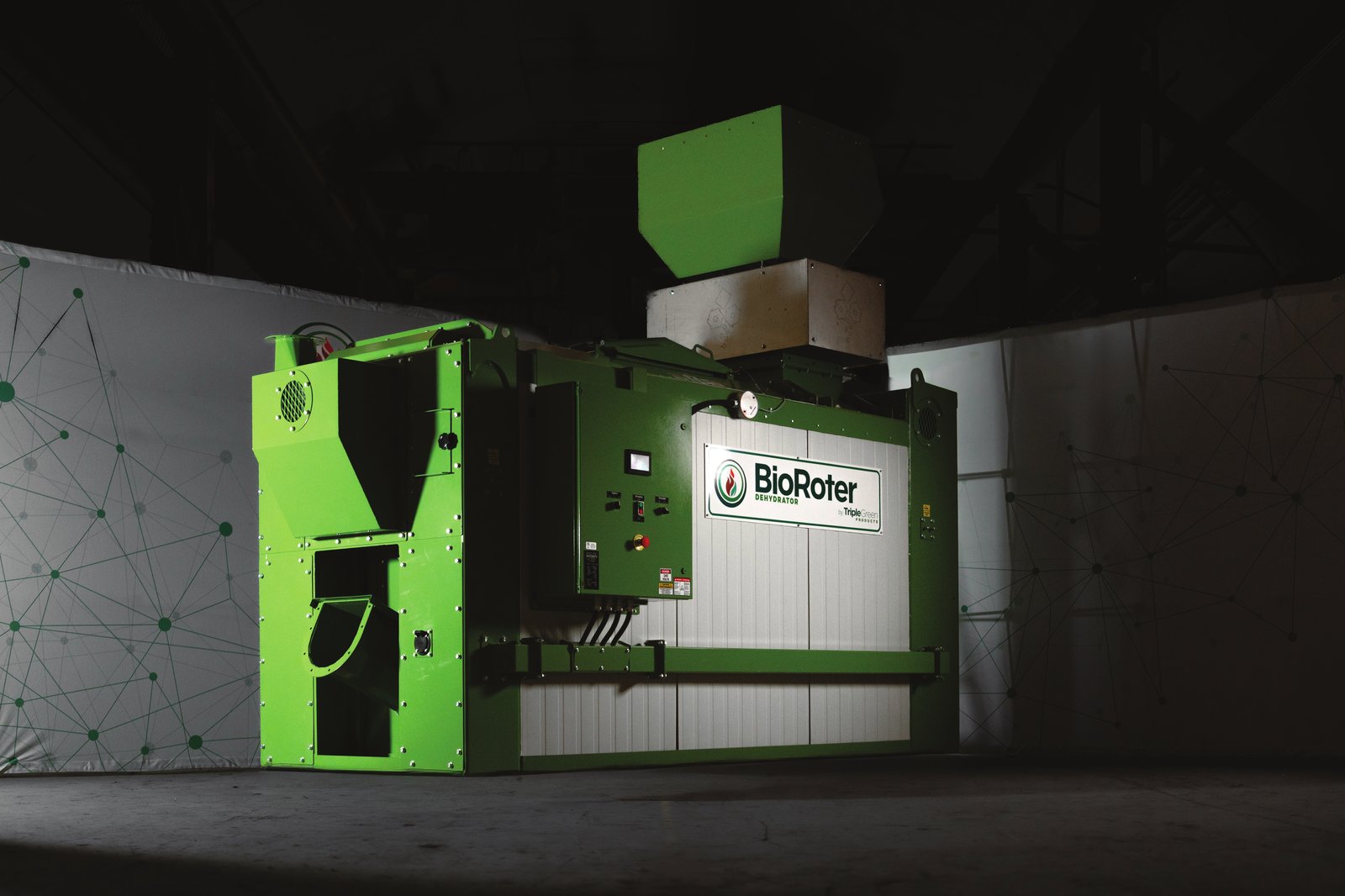
Losing birds, pigs, or livestock is part of production, and what you do next decides how much time, money, and biosecurity risk it costs. Poultry mortality disposal works best when it happens on your own premises, on your schedule, without waiting on a pickup truck. The BioRoter Dehydrator from Triple Green Products is a patented on-site system that uses radiant and convective heat inside a heavy-duty stainless steel hull to dry and sterilize a full load in 8 to 16 hours, depending on unit size and load. It is built for poultry producers, hog operations, and meat processors that want a controlled, on-site alternative to hauling, composting piles, or burning. |
|
On-Site Poultry Mortality Disposal for Producers and Processors
Every operation needs a plan for mortalities, and the best plan is one that still works during a mortality spike, a disease event, or a busy processing week. The BioRoter handles poultry, hogs, and other livestock mortality, along with applicable organic waste from meat processing, in one on-site machine.
Why Hauling Mortalities Off the Farm Is Getting Harder
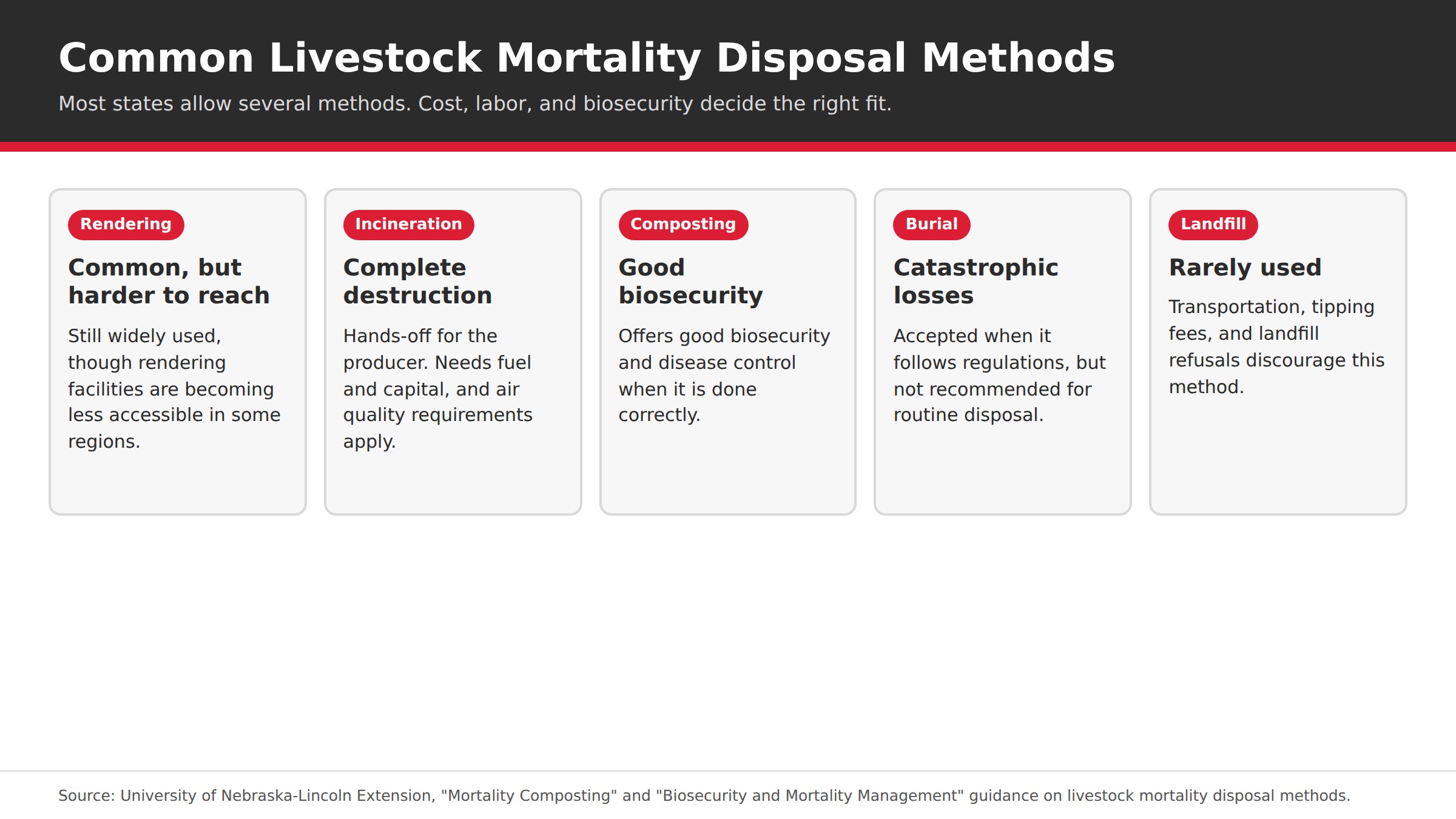
Rendering has long been a common choice, but access is shifting. University of Nebraska-Lincoln Extension notes that rendering remains widely used but is becoming less accessible in some regions, and that disease outbreaks can limit collection. Moving mortality off the property also moves a disease risk onto the road and onto other farms. Processing material where it is generated avoids that transport.
Poultry Mortality Disposal Without Waiting on Pickup
With a BioRoter on site, mortalities go into the machine instead of into a pile, a freezer, or a truck. The load is heated, mixed, and dried under automatic control, and what comes out is a dry, stable material that is easier to handle and store than untreated mortality. There is no daily scramble to meet a pickup window, and no carcasses sitting outside as an attraction for scavengers.
Mortality Disposal Options Compared: Dehydration, Composting, and Incineration
The right method depends on volume, facility layout, labor, and local rules. This comparison shows how dehydration stacks up against the two most common on-farm alternatives.
| Factor | BioRoter Dehydrator | Composting | Incineration |
|---|---|---|---|
| Typical timeline | 8 to 16 hours per load | Weeks to months | Hours per load |
| Main inputs | Propane or natural gas heat, with electric on the smallest model | Carbon source, space, and loader time | Fuel such as diesel or propane |
| Process control | PLC-controlled temperature and moisture targets | Depends on pile or bin management | Depends on unit and operator |
| Air quality considerations | Exhaust fan manages moisture removal | Odor management in open piles | Emissions and air quality rules apply |
| End product | Dry, processed material | Finished compost | Ash |
When Composting Fits Better
Composting works well for operations with space, a carbon source, and labor to manage piles or bins, and extension programs consider it a good biosecurity option when done correctly. Operations that want an enclosed composting approach for livestock can review a drum-style composter for on-farm mortalities.
When Incineration Fits Better
Incineration offers complete destruction and little hands-on work, but it needs fuel, a capital outlay, and attention to air quality requirements. Operations that already rely on burning, or that need fast destruction regardless of fuel cost, can compare on-farm incinerators for mortalities.
When Dehydration Fits Best
Dehydration is a strong fit when you want a fast, enclosed, automated process with a dry end product and minimal labor. It suits poultry complexes that generate daily mortality, hog operations with steady losses, and meat processors that need to move organic waste out quickly.
For operations that also handle food waste or want a digestion-based option, biodigester systems for organic waste offer a different processing path.
How the BioRoter Dehydration Process Works
|
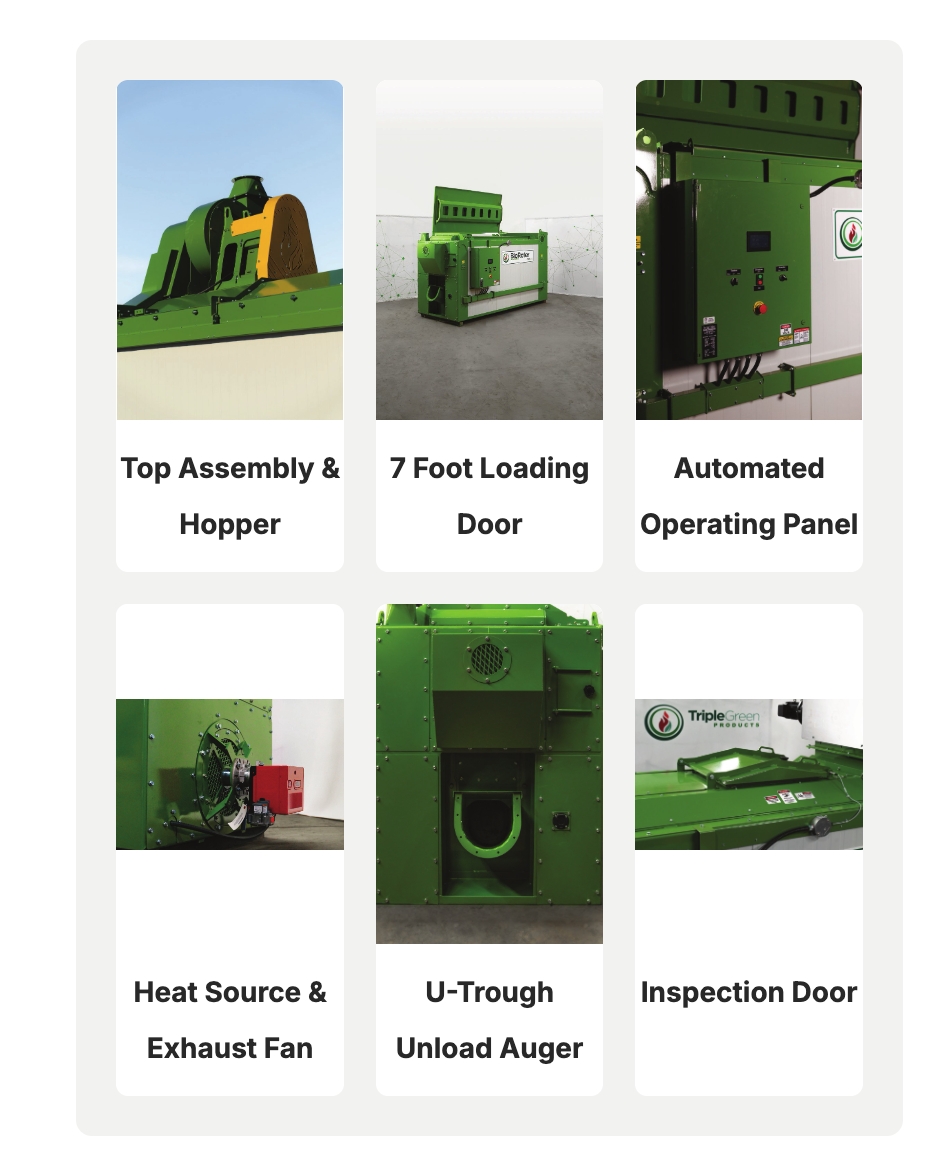
At the center of every BioRoter is a PLC-controlled system that holds temperature and moisture targets throughout the cycle. That takes the guesswork out of whether a load has been fully dried and sterilized. Six built-in features do the work of every cycle:
|
|
- Load. Mortality or organic waste enters through the wide loading door and the optional grinder.
- Heat and mix. A heavy-duty chomper paddle and mixing paddle turn the material continuously while radiant and convective heat bring the load to a controlled temperature.
- Dehydrate. The PLC controller holds exact temperature and moisture targets, drying and sterilizing the load in as little as 8 hours.
- Unload and reuse. A U-trough auger discharges dry, stable material, and the unit is ready for the next batch.
Loading and Grinding
Material enters through a 7 foot wide loading door, wide enough for bulk loading without the bottlenecks of a narrow opening. An optional grinder, available in a smaller configuration for poultry and a larger configuration for hogs and other livestock, breaks material down before it reaches the drum.
Heating and Mixing
Inside the vessel, the chomper paddle and mixing paddle turn continuously on a reinforced center shaft. Constant movement keeps material from settling, so heat reaches every part of the load evenly rather than leaving cold spots that undermine sterilization.
Moisture Removal and Heat Source Options
A variable speed exhaust fan with adjustable airflow manages moisture removal throughout the cycle. The unit offers propane and natural gas heating, with electric heating available only on the 3 foot by 8 foot model. Match the heat source to the utilities you already have at the site.
Unloading and Mid-Cycle Checks
When the cycle ends, a U-trough unload auger discharges the finished material. An inspection door provides quick visual access, so you can check on a load mid-cycle without a full teardown.
BioRoter Applications for Poultry, Hog, and Meat Processing Operations
Poultry Operations
|
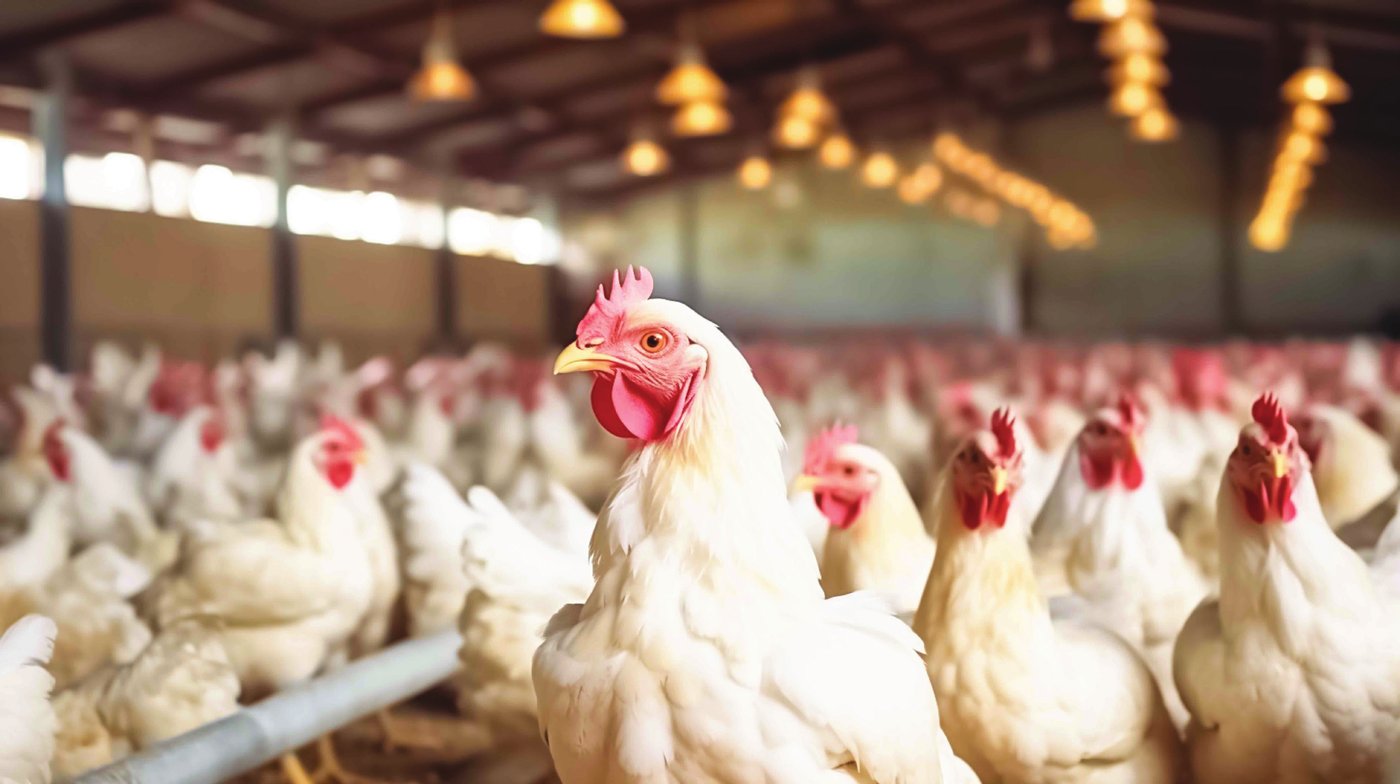
Poultry houses generate steady daily mortality, and a dehydrator turns that routine into a short, predictable task. The smaller grinder configuration is sized for poultry, and the 4 foot by 24 foot vessel is a common mid-range fit for growing poultry operations. Keeping mortality on the premises also reduces how often vehicles carrying carcasses need to approach your barns. |
|
Hog and Livestock Operations
|
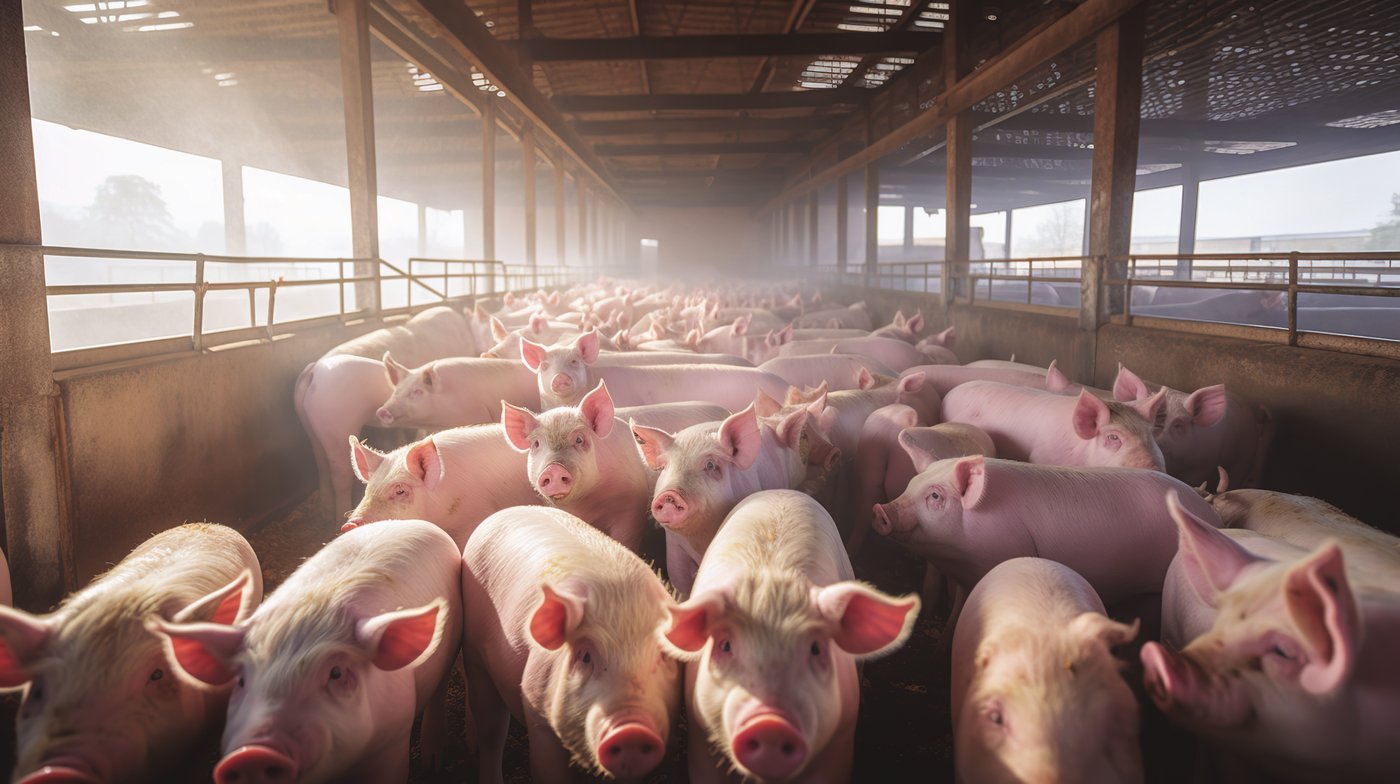
Hog operations deal with larger animals and a wider range of weights, from piglets to sows. The larger grinder configuration is built for hogs and other livestock, breaking material down before it reaches the drum so heat can penetrate evenly. The same base unit can be configured to match what your operation actually processes. |
|
Meat Processors
Small and mid-size meat processors can use the BioRoter to dehydrate organic processing waste on site, which significantly reduces volume and cuts reliance on off-site waste services. With four sizes available, processors can select a system based on daily waste volume. Plants that prefer to turn offal and food waste into compost can also look at an electric in-vessel composter for meat by-products.
BioRoter Sizes and Capacity Planning
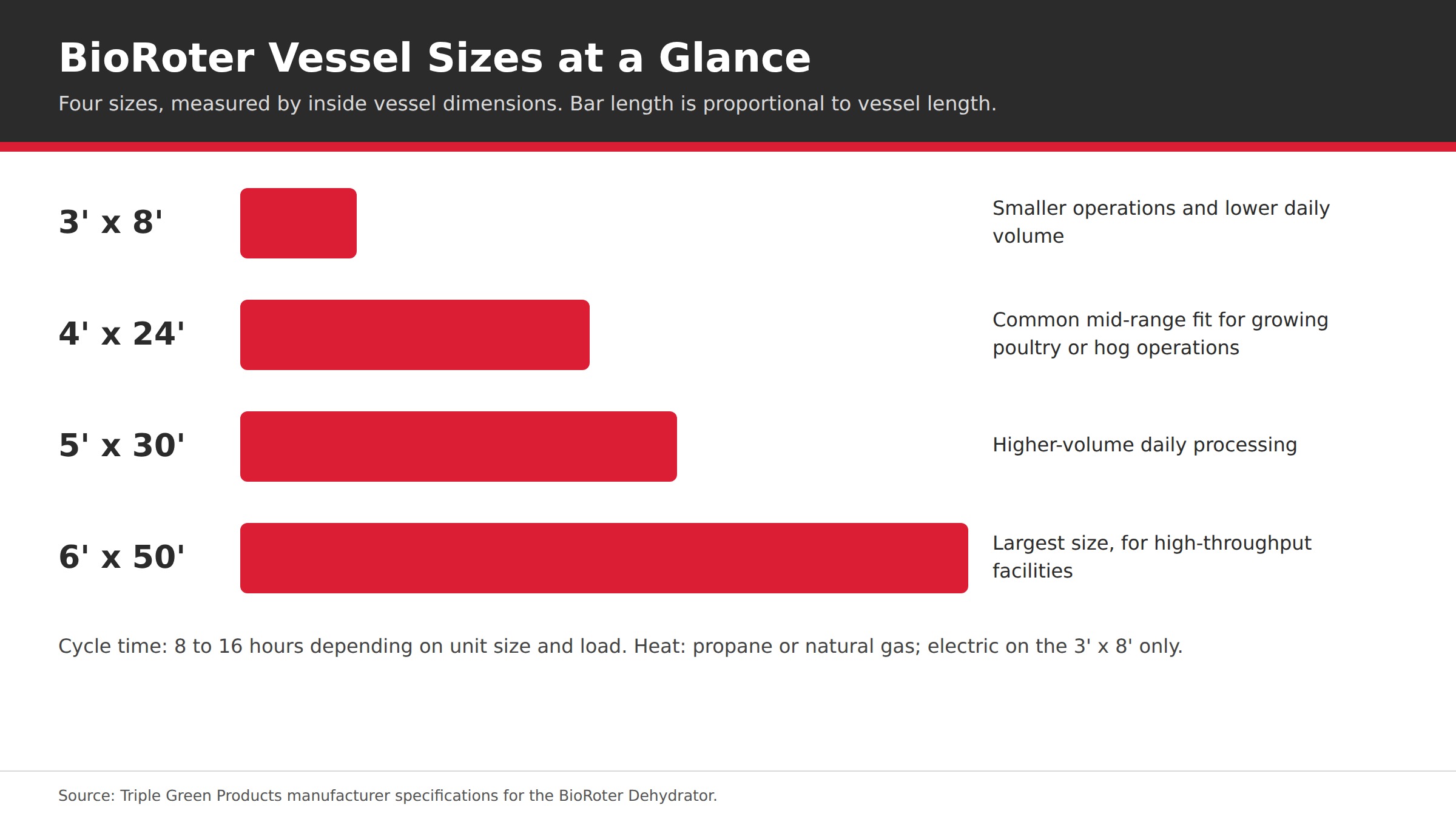
The BioRoter comes in four sizes, measured by inside vessel dimensions. The right unit depends on peak daily mortality and waste volume, including seasonal swings and busy processing periods, so facilities avoid paying for unused capacity while still covering their worst days.
- 3 ft x 8 ft vessel: suited to smaller operations and lower daily volume.
- 4 ft x 24 ft vessel: a common mid-range fit for growing poultry or hog operations.
- 5 ft x 30 ft vessel: built for higher-volume daily processing.
- 6 ft x 50 ft vessel: the largest configuration for high-throughput facilities.
Sizing to Peak Mortality, Not Averages
Selecting a unit based only on flock size, herd size, or average daily volume can leave you short when demand rises. Seasonal production, processing schedules, and unexpected mortality events all push volume above the average. Plan for your peak days.
Cycle Frequency and Labor
Cycle frequency matters as much as vessel size. A smaller unit that runs several cycles a day can handle a similar daily volume to a larger unit that runs fewer, but each approach changes labor, energy use, and operating schedules. Our team can help you evaluate peak volumes, expected cycles, and site requirements to choose a configuration.
What Happens to the Finished Material
|
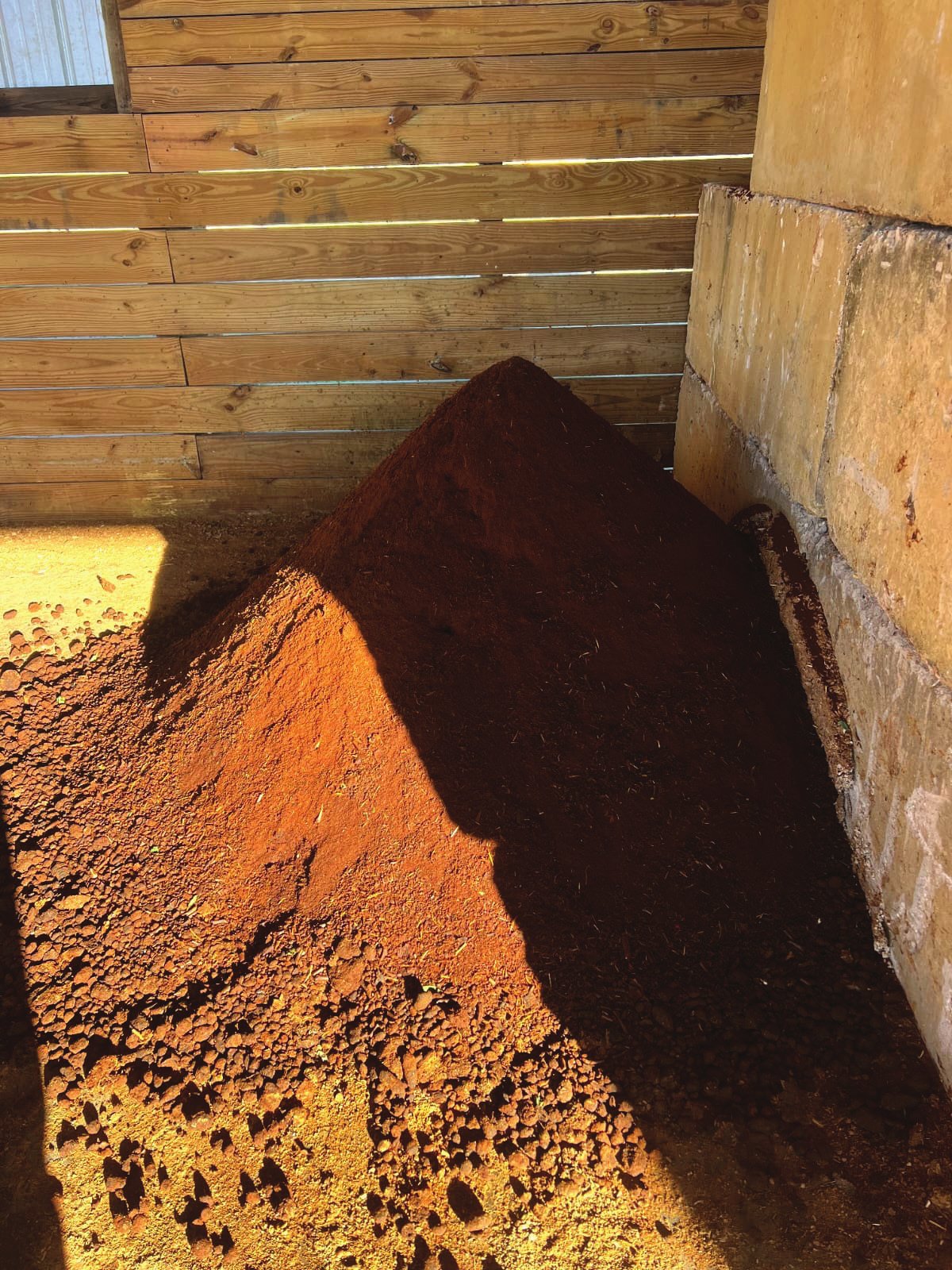
The BioRoter produces a dry, processed material that is easier to handle, store, and manage than untreated mortality or organic waste. Depending on the original material and applicable regulations, the finished product may offer opportunities for beneficial reuse, including certain agricultural applications. Our team can help you understand the processing capabilities and considerations for your specific application.
Before you plan on reuse, confirm these points with your state agriculture department:
|
|
Maintenance and Year-Round Reliability
A machine at the center of daily operations has to keep running, especially during a mortality spike, when a day or two offline puts you right back into the problem the equipment is meant to solve.
Built to Resist Moisture, Ammonia, and Cleaning Chemicals
The stainless steel U-trough hull is built to resist the combination of moisture, ammonia, and cleaning chemicals that wears down lighter materials, and the paddle assembly is built around a heavy-duty center shaft. Construction is intended for heavy daily demand in every season, so a hard swing in temperature does not send you scrambling for a backup plan.
PLC Monitoring and Routine Upkeep
Because the system is PLC-controlled, most day-to-day monitoring happens through the operating panel instead of manual checks. Regular upkeep centers on inspecting the chomper and mixing paddle assembly and checking the hull and auger for wear. Remote monitoring support is available to flag a developing issue before it causes a missed cycle, and installation support is available when the unit is delivered.
Regulatory Considerations for Mortality and Waste Management
Requirements vary by state, material type, and processing application. Producers and processors should consider disposal timelines, environmental rules, and disease-control requirements when choosing a method. Some state agriculture departments publish approval guidelines for thermal dehydrators, which can cover species limits, where mortality may originate, and setbacks from property lines and wells.
Check with your state agriculture department or state veterinarian before you buy, so the equipment and operating procedures meet your facility's needs. Our team can share what we know about configuration, and for a wider look at waste processing equipment, the full lineup shows every option side by side.
Planning Your BioRoter Installation
- Estimate peak daily mortality. Include seasonal highs and worst-case events.
- List what you will process. Poultry, hogs, other livestock, or processing waste can call for different grinder options.
- Choose a heat source. Confirm whether propane, natural gas, or electric (3 ft x 8 ft only) fits your site.
- Check local requirements. Confirm approvals and setbacks with the state agency before purchase.
- Plan loading and removal. Decide how mortality reaches the loading door and where dried material will go.
Send those details through the contact form for a BioRoter sizing recommendation, and our team will help you match a unit to your operation.
Request BioRoter Pricing and Sizing Help
Get a Custom BioRoter ConfigurationTell us your peak daily mortality, what you process, and your available utilities, and our team will follow up with a recommended size and quote.
|
Bierman Equipment offers the BioRoter alongside composters, digesters, and incinerators, so you can compare approaches instead of fitting your operation around one machine.
Frequently Asked Questions About Poultry Mortality Disposal
How long does a BioRoter cycle take?
A full cycle typically takes 8 to 16 hours, depending on unit size and load. Larger units processing heavier or wetter loads generally run toward the longer end of that range.
What can I do with the material after it comes out?
The BioRoter produces a dry, processed material that is easier to handle and manage than untreated mortality or organic waste. Depending on the original material and applicable regulations, opportunities for beneficial reuse may be available, including certain agricultural applications.
Which BioRoter size fits my operation?
The BioRoter comes in four vessel sizes: 3 x 8 ft, 4 x 24 ft, 5 x 30 ft, and 6 x 50 ft, measured by inside vessel dimensions. The right size depends on peak daily mortality and waste volume, processing requirements, and expected cycles, not just herd or flock size.
Does the BioRoter work for both poultry and hog operations?
Yes. The unit accepts an optional grinder in a smaller configuration for poultry or a larger configuration for hogs and other livestock, so the same base unit can match what your operation processes.
Does the BioRoter work for small and mid-size meat processors?
Yes. It gives small and mid-size meat processors an on-site way to manage organic processing waste. Dehydrating the waste reduces its volume, simplifies handling, and reduces reliance on off-site waste services, and multiple sizes let processors choose a unit based on daily volume.
What heat source does the BioRoter use?
The BioRoter offers propane and natural gas heating, with electric heating available only on the 3 x 8 ft model. Our team can help match the configuration to the utilities available at your site.
How much daily maintenance does a BioRoter need?
Because the system is PLC-controlled, most monitoring happens through the operating panel. Regular upkeep centers on inspecting the paddle assembly and checking the hull and auger for wear, with remote monitoring support available to flag issues early.