


Animal carcass disposal regulations in the United States are designed to protect livestock health, public safety, water quality, soil quality, and overall biosecurity. For farms, ranches, poultry operations, dairies, feedlots, and other agricultural businesses, carcass disposal is not just an operational task. It is a compliance responsibility that must be handled quickly, carefully, and in accordance with federal, state, and local requirements. Improper disposal can spread disease, attract scavengers, contaminate groundwater, create odor complaints, and lead to enforcement actions.
Animal mortalities are an unavoidable part of agriculture. Livestock may die from illness, injury, extreme weather, birthing complications, natural disasters, transportation stress, or disease outbreaks. When that happens, producers need a clear disposal plan that accounts for the species, number of animals, cause of death, location, weather conditions, available equipment, and applicable regulations.
While the federal government provides guidance for disease control, environmental protection, and emergency response, most day-to-day carcass disposal requirements are set and enforced at the state level. That means farms must understand both broad federal expectations and the specific rules in their state, county, and municipality.
Animal Carcass Disposal Regulations in the United States
Animal carcass disposal in the United States is regulated through a combination of agricultural, environmental, public health, and transportation rules. There is no single national law that applies identically to every farm in every state. Instead, compliance depends on the type of animal, the disposal method, the cause of death, the location of the operation, and whether the mortality event is routine or part of a disease emergency.
Federal agencies such as the USDA and EPA provide important oversight and guidance. The USDA Animal and Plant Health Inspection Service addresses carcass management in the context of animal disease prevention and emergency response. APHIS carcass management guidance emphasizes that contaminated or potentially contaminated carcasses should be managed in a way that contains pathogens, protects the environment, supports stakeholder acceptance, and maintains cost effectiveness. The EPA also recognizes carcass disposal as an important livestock management issue because improper disposal can affect disease transmission, air quality, water quality, and environmental safety.
For everyday farm mortalities, state departments of agriculture, environmental quality agencies, and local authorities usually define what methods are allowed. State rules often address:
- How soon carcasses must be disposed of after death
- Whether on-site burial is allowed
- Required setbacks from wells, streams, property lines, public roads, and residences
- Whether composting is permitted and under what conditions
- Whether rendering is available or required
- How carcasses must be transported
- Whether permits are required for incineration, composting, burial, or landfill disposal
- Special rules for diseased animals or mass mortality events
Producers should never assume that a method allowed in one state is automatically allowed in another. A burial pit that is acceptable in one county may be prohibited in another due to groundwater depth, soil type, flood risk, or local ordinances. Likewise, composting requirements can vary by state and may include temperature monitoring, carbon source requirements, pad design, leachate control, and recordkeeping.
Approved Disposal Methods for Livestock
Most U.S. livestock mortality rules recognize several common disposal methods. The EPA identifies rendering, burial, incineration, and composting as typical animal mortality disposal methods, each with its own advantages and challenges. The right choice depends on regulatory approval, animal size, site conditions, disease risk, cost, equipment availability, and environmental safeguards.
Rendering
Rendering is one of the most established carcass disposal options. It involves transporting carcasses to a rendering facility where they are processed into usable byproducts. Rendering can be efficient, biosecure, and environmentally responsible when available.
However, farms must follow rules for carcass storage and transport. Carcasses may need to be collected promptly, covered, contained, and protected from scavengers. Rendering may not be available in all regions, and renderers may refuse animals that died from certain diseases, were chemically euthanized, or are too decomposed.
Composting
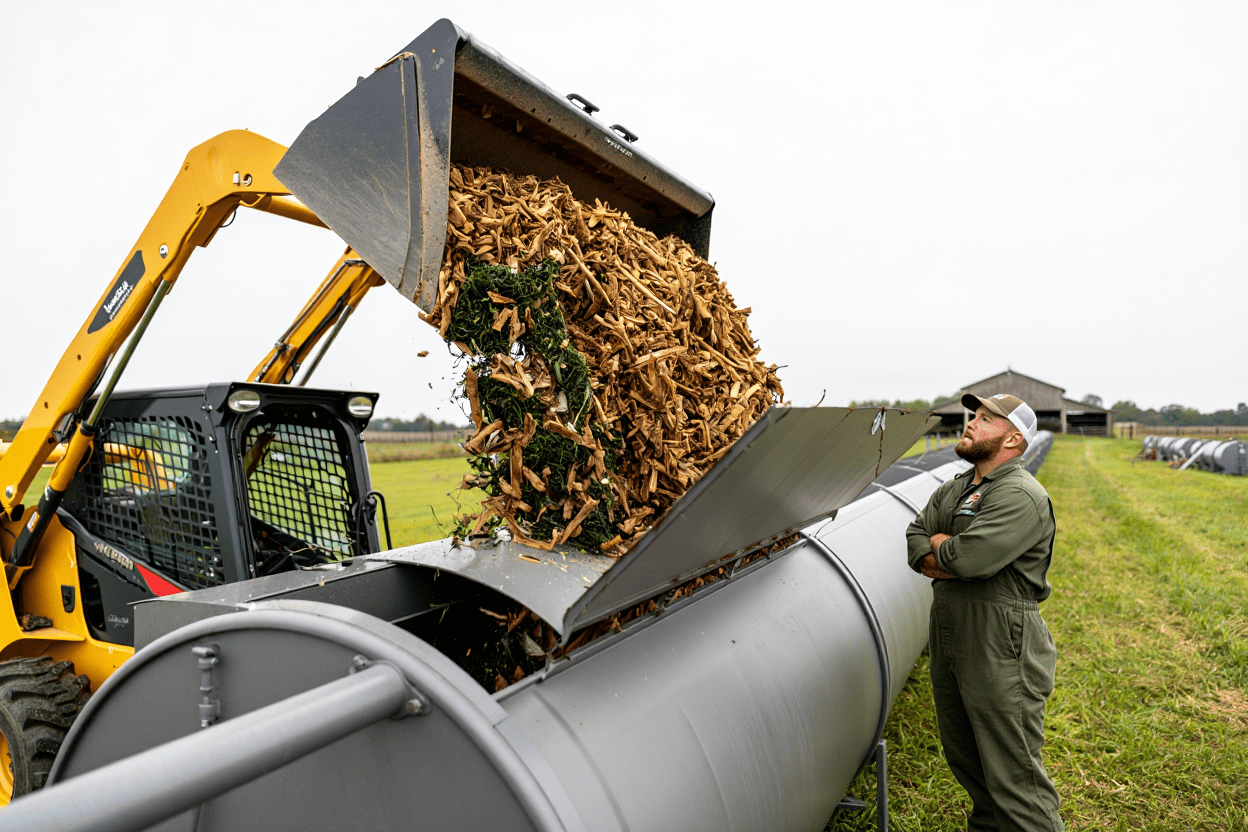
Composting is widely used for poultry, swine, cattle, and other livestock mortalities when allowed by state rules, especially when the process is supported by reliable livestock mortality composting equipment. It uses controlled biological activity to break down carcasses with carbon materials such as wood chips, sawdust, straw, corn stalks, or other approved bulking agents.
Proper carcass composting requires attention to:
- Carbon-to-nitrogen balance
- Adequate cover material
- Moisture control
- Temperature monitoring
- Odor prevention
- Leachate management
- Protection from scavengers
- Complete decomposition before land application or final use
Composting can be practical for farms because it allows on-site management and reduces transportation needs. However, it must be done correctly. A poorly built compost pile can create odor, attract pests, fail to reach effective temperatures, or release liquids into soil and water.
Burial
Burial is still permitted in some areas, but it is often restricted because of groundwater and soil contamination concerns. State rules may limit burial based on soil type, depth to groundwater, floodplain location, distance from wells, and distance from surface waters.
Burial may not be appropriate for large animals, high mortality volumes, disease outbreaks, rocky soils, sandy soils, or areas with shallow groundwater. Even when burial is allowed, producers may need to follow specific trench depth, cover, and setback rules.
Incineration
Incineration uses high heat to reduce carcasses to ash. It can be highly biosecure when performed with approved agricultural incineration equipment and proper operating procedures. It may be used for poultry, swine, small ruminants, and certain disease-related mortalities.
Because incineration affects air emissions, producers may need permits or must use equipment that meets state air quality requirements. Open burning is usually more restricted than controlled incineration and may be prohibited except under emergency authorization.
Landfill Disposal
Some permitted landfills accept animal carcasses, especially during emergency events or when other methods are unavailable. Landfill disposal requires coordination with the receiving facility and may involve transport rules, containment requirements, and advance approval.
Landfills may reject carcasses due to disease concerns, volume limits, odor issues, or local waste acceptance policies. Farms should confirm acceptance before transporting mortalities.
Emergency Disposal Methods
During foreign animal disease outbreaks, natural disasters, heat events, or mass mortality incidents, disposal requirements may change. Federal and state authorities may direct producers to use specific methods to prevent disease spread and protect the public. USDA emergency carcass management resources include options such as composting, burial, landfilling, rendering, incineration, mobile treatment, and secure transport, depending on the incident and risk level.
Waste Processing Solutions That Meet Compliance
Compliance is easier when farms have reliable waste processing solutions in place before a mortality event occurs. Waiting until carcasses are already present can lead to rushed decisions, improper handling, and preventable violations. A proactive waste processing strategy helps producers respond quickly, document actions, and reduce the risk of environmental or biosecurity problems.
Modern waste processing solutions can support compliance by improving how farms collect, move, contain, process, and document animal mortalities. Depending on the operation, this may include composting equipment, bone grinding equipment, containment systems, mortality handling attachments, rendering support equipment, incineration systems, storage solutions, and material handling tools.
A compliant system should help farms achieve several goals:
- Reduce the time between animal death and disposal
- Limit direct human and animal exposure
- Prevent scavenger access
- Control odors and leachate
- Support approved disposal methods
- Improve worker safety
- Maintain cleaner mortality handling areas
- Reduce disease transmission risks
- Create records that support regulatory compliance
The best solution is not always the most complex. For some farms, compliance may depend on better containment, faster loading, and a more controlled composting process. For others, it may require specialized equipment that supports high-volume livestock handling or improves the efficiency of waste processing.
How Waste Processing Solutions Help Compliance
Waste processing equipment helps farms turn compliance requirements into repeatable daily procedures. Instead of relying on improvised handling, farms can standardize how carcasses are collected, processed, and moved through an approved disposal pathway.
Improved Biosecurity
Disease control is one of the central reasons carcass disposal rules exist. Carcasses can harbor pathogens, and improper handling can spread contamination through equipment, boots, tires, runoff, insects, birds, and scavengers.
Waste processing solutions help reduce risk by limiting unnecessary movement, improving containment, and creating defined handling zones. Equipment can also reduce manual contact, which protects workers and supports cleaner operations.
Better Environmental Protection
Many disposal regulations are focused on protecting water and soil. Leachate from decomposing carcasses can carry nutrients, pathogens, and organic matter into the environment if not properly controlled.
On-site composting systems, containment areas, and material handling equipment can help farms manage moisture, apply adequate cover material, and prevent runoff. For burial, equipment precision can help maintain required depths and setbacks, though producers must still confirm that burial is allowed.
More Consistent Documentation
Compliance often depends on being able to show what was done, when it was done, and how it aligned with approved practices. Equipment and process standardization make recordkeeping easier.
Farms may benefit from tracking:
- Date and time mortality was discovered
- Species and number of animals
- Suspected cause of death
- Disposal method used
- Disposal location
- Compost temperature logs, when applicable
- Transport records
- Contractor or renderer receipts
- Permit numbers or approvals
- Corrective actions taken
Records can be especially important during inspections, disease events, insurance claims, disaster assistance applications, or audits.
Faster Response During High-Mortality Events
Heat stress, disease, storms, power failures, or ventilation problems can create sudden mortality spikes. Farms with established waste processing systems can respond faster and reduce the chance of carcasses accumulating beyond allowed timeframes.
A clear process also helps employees know what to do. Training workers on approved disposal methods, equipment use, personal protective equipment, and sanitation procedures can prevent mistakes during stressful situations.
Federal and State Guidelines
Federal and state guidelines work together, but they do not serve the same role. Federal agencies provide national guidance, emergency frameworks, environmental considerations, and disease response protocols. States typically define routine mortality disposal rules and enforce many day-to-day requirements.
The USDA APHIS carcass management guidance is particularly relevant during animal health emergencies. Its resources support decisions around contaminated materials, animal carcasses, disease containment, environmental protection, and emergency response planning. The EPA provides guidance on carcass disposal as an agricultural and environmental issue, emphasizing that proper disposal helps prevent livestock disease transmission and protects air and water quality.
At the state level, rules may be issued by:
- State departments of agriculture
- State veterinarians
- Environmental quality departments
- Public health agencies
- Natural resource agencies
- County zoning offices
- Local solid waste authorities
Because state rules differ, farms should check their state’s approved mortality management options before choosing a disposal system. Producers should also ask whether different rules apply to routine mortalities, catastrophic mortalities, diseased animals, chemically euthanized animals, and animals that die during transport.
Staying Ahead of Animal Carcass Disposal Regulations
A strong compliance plan should include:
- A written mortality management procedure
- A list of approved disposal methods for the farm’s state and county
- Contact information for renderers, veterinarians, landfill operators, and regulators
- Emergency plans for disease outbreaks or mass mortality events
- Site maps showing wells, waterways, property lines, roads, and disposal areas
- Equipment maintenance procedures
- Employee training records
- Documentation and record retention procedures
Common Mistakes to Avoid
Even experienced agricultural operations can run into compliance problems when disposal practices are informal or outdated. Avoiding common mistakes can reduce regulatory risk and protect the farm.
Mistake 1: Assuming all disposal methods are legal everywhere
Not every state allows the same methods. Burial, composting, incineration, rendering, and landfill disposal may each have specific restrictions. Always verify state and local rules.
Mistake 2: Delaying disposal too long
Many states require carcasses to be disposed of within a specific timeframe. Delays increase odor, scavenger, insect, and disease risks.
Mistake 3: Composting without enough carbon material
A carcass compost pile needs sufficient cover and carbon material to control odor, support heating, and protect the pile from scavengers. Thin cover layers are a common cause of failure.
Mistake 4: Ignoring water setbacks
Burial or composting too close to wells, streams, ponds, ditches, or drainage areas can create environmental violations. Setbacks should be confirmed before disposal areas are used.
Mistake 5: Failing to plan for mass mortality
Routine disposal systems may not be enough during a disease outbreak, severe weather event, or equipment failure. Farms should have backup options.
Mistake 6: Transporting carcasses improperly
Carcasses transported off-site may need to be covered, leak-proof, permitted, or accompanied by records. Improper transport can create biosecurity and road safety issues.
Mistake 7: Poor recordkeeping
If a regulator asks how mortalities were handled, verbal explanations may not be enough. Written records support compliance and show responsible management.
Mistake 8: Using unapproved open burning
Open burning is often restricted because of air quality, odor, and public health concerns. Producers should use approved incineration methods only when allowed.
Mistake 9: Not training employees
Employees who discover or handle carcasses should know the farm’s procedure. Training reduces delays and prevents improper disposal.
Mistake 10: Overlooking euthanasia drug concerns
Animals euthanized with certain chemicals may be restricted from rendering, composting, or scavenger exposure. Producers should consult veterinarians and disposal providers when chemical residues may be present.
FAQ
What are animal carcass disposal regulations?
They are federal, state, and local rules that govern how dead livestock and other animal mortalities must be handled, transported, processed, and disposed of.
Who regulates animal carcass disposal in the U.S.?
State agencies usually regulate routine disposal, while federal agencies such as USDA APHIS and EPA provide guidance related to disease control, environmental protection, and emergencies.
What are the most common approved disposal methods?
Common methods include rendering, composting, burial, incineration, and disposal at approved landfills.
Is burial always legal for livestock carcasses?
No. Burial rules vary by state and may depend on soil type, groundwater depth, flood risk, and required setbacks.
Is composting livestock carcasses allowed?
Composting is allowed in many states, but farms must follow rules for pile construction, cover material, temperature, location, and environmental protection.
Can farms dispose of carcasses in a landfill?
Some permitted landfills accept carcasses, but acceptance must be confirmed in advance and may require special handling or approval.
What should farms do during a disease outbreak?
They should contact the state veterinarian, follow USDA and state response guidance, and use only approved disposal methods.
Why is recordkeeping important?
Records show that mortalities were handled properly and can support inspections, audits, disease response, and environmental compliance.
How can equipment help with compliance?
The right equipment improves handling, containment, processing, transport, composting efficiency, worker safety, and documentation.
What is the first step toward better compliance?
Review state and local disposal rules, identify approved methods, and create a written mortality management plan.
Transform Your Operation with Bierman Equipment
Animal carcass disposal compliance starts with preparation, but it becomes easier with the right equipment and the right partner. Farms need solutions that support efficient handling, cleaner waste processing, stronger biosecurity, and dependable day-to-day performance.
Bierman Equipment provides innovative equipment changing the world of agriculture. Explore the possibilities with us and experience a transformative upgrade for your operations. Enhance your operational capabilities by integrating a solution from Bierman Equipment, designed to boost functionality and efficiency. With a legacy of innovation and a dedication to customer satisfaction, we are your trusted partner for growth.
To improve waste processing, support compliance, and strengthen your farm’s operational efficiency, connect with us today and discover equipment solutions built for the future of agriculture.