

Food Waste Disposal Solutions for Processing Plants
Food waste disposal solutions for processing plants are a critical part of modern operations as facilities work to control costs, improve efficiency, and meet growing environmental expectations. In processing plants, waste is not just an unavoidable byproduct. It affects labor, hauling expenses, sanitation, compliance, equipment performance, and overall profitability.
When plants treat food waste as a manageable material stream instead of a recurring burden, they can create cleaner workflows, reduce disposal challenges, and support stronger long-term production goals. Bierman Equipment offers advanced biodigester systems and broader waste processing equipment solutions to help facilities build a smarter approach.
Why Food Waste Disposal Matters in Processing Plants
Processing plants generate food waste in many forms, including raw trimmings, spoiled ingredients, off-spec products, packaging-contaminated organics, sludge, wash water solids, and residual materials from sorting or preparation lines. The larger the facility, the more complex the waste stream becomes. High-volume operations cannot rely on basic collection and removal alone. They need systems that can support throughput, limit downtime, and align with long-term business goals.
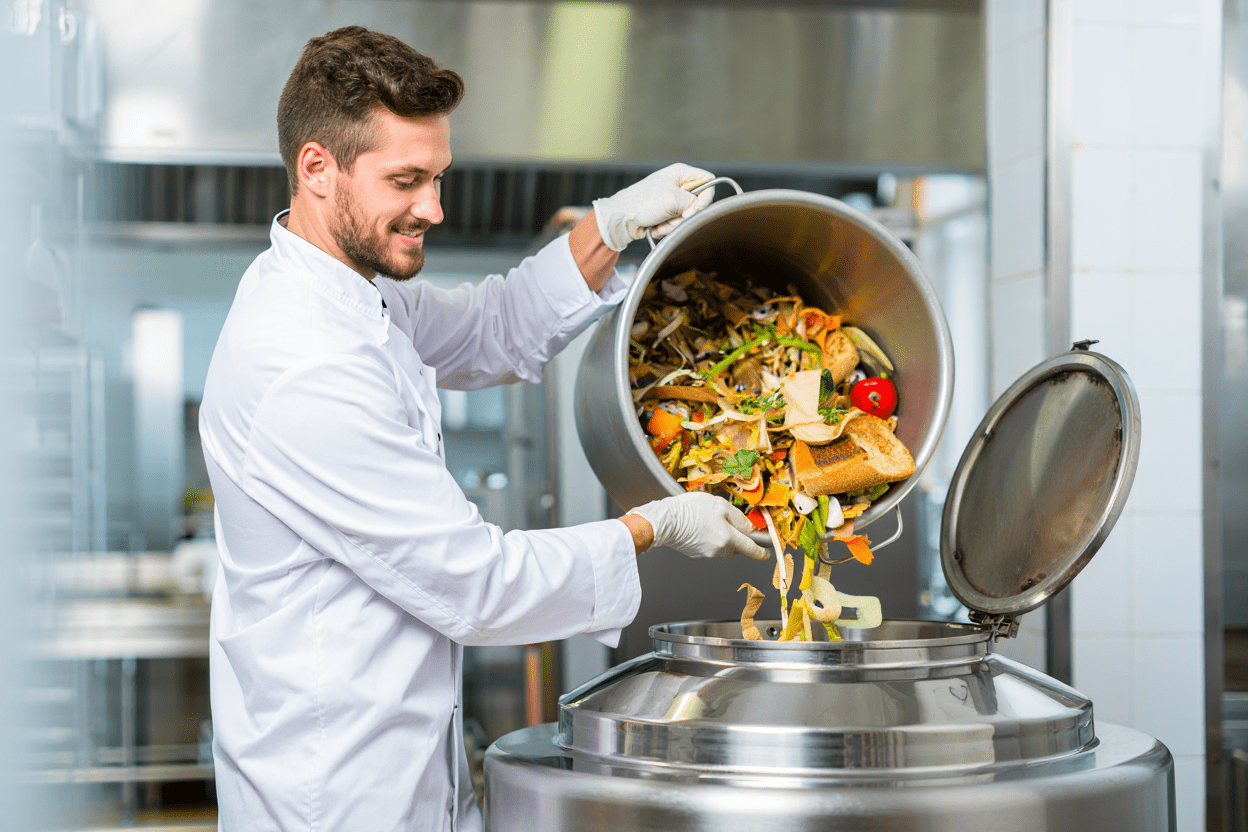
Choosing the Right Food Waste Disposal Solutions for Processing Plants
The right path depends on waste volume, moisture content, contamination level, available space, labor capacity, local regulations, and whether the facility wants to recover value through compost, biogas, or nutrient reuse. Among the strongest options are biodigesters and composting systems, both of which give plants a more strategic alternative to landfill disposal.
Waste Processing Solutions for Industrial Food Waste
Industrial food waste requires more than collection and off-site removal. Processing plants need systems designed to handle large volumes of organic material quickly, consistently, and hygienically. In many facilities, the challenge starts with inconsistency. One day may bring produce scraps, dairy residues, bakery waste, or meat byproducts in manageable volumes, while the next may bring spikes from seasonal demand, line changeovers, or quality problems.
Without a scalable system, facilities risk overflowing containers, sanitation concerns, inefficient labor use, and rising hauling fees. A stronger strategy uses multiple components that work together to create a controlled, more efficient disposal workflow.
Core Components of a Stronger Waste Processing System
- Collection systems that move waste efficiently from the production floor
- Separation equipment that removes contaminants or packaging
- Size reduction systems that grind or shred organic material
- Dewatering units that lower moisture content and reduce hauling weight
- Biodigesters or composting systems that convert waste into usable outputs
- Monitoring and control features that support process consistency
For facilities looking to reduce manual handling and gain better control over waste flow, Bierman Equipment’s size reduction and grinding equipment can support a more organized, scalable approach.
How Waste Processing Solutions Handle Food Waste
Food waste processing solutions manage organic material through a series of steps designed to make disposal more efficient and more productive. Organic residuals are typically collected from production lines, prep areas, trimming stations, and quality control zones, then moved to a centralized processing area.
Upstream Handling
- Grinding or pulping to create a more uniform stream
- Separation to remove plastic, packaging, or contaminants
- Dewatering to reduce liquid content and total mass
- Conditioning material for downstream treatment
Downstream Treatment
- Biological treatment through biodigestion
- Aerobic treatment through composting
- Output handling for reuse, transport, or final application
- Tracking and controls for process consistency
Biodigesters rely on anaerobic digestion, a process in which microorganisms break down organic waste in the absence of oxygen to create recoverable outputs such as biogas and digestate. Composting systems rely on aerobic decomposition and can produce nutrient-rich compost when moisture, carbon, nitrogen, and aeration are properly balanced. The right choice depends on material characteristics and the facility’s broader goals.
Biodigesters and Composting Systems Compared
Both methods can outperform landfill disposal, but they solve the problem in different ways. Some plants benefit most from energy recovery and wet-waste processing, while others need a stronger fit for fibrous or drier biodegradable solids.
| Option | Best Fit | Primary Benefit | Typical Output |
|---|---|---|---|
| Biodigesters | High-moisture organics, slurry, steady wet food waste | Energy recovery and volume reduction | Biogas and digestate |
| Composting Systems | Biodegradable solids, fibrous residuals, mixed organics | Landfill diversion and nutrient recovery | Stable compost product |
| Hybrid Approach | Facilities with varied waste streams | Better material matching and flexibility | Energy plus compost/nutrient reuse |
A hybrid setup can be especially effective. Wet organics may be routed to a biodigester, while drier or more fibrous materials move into an enclosed composting stream. Plants that evaluate their waste profile carefully are usually in the best position to choose the right technology mix.
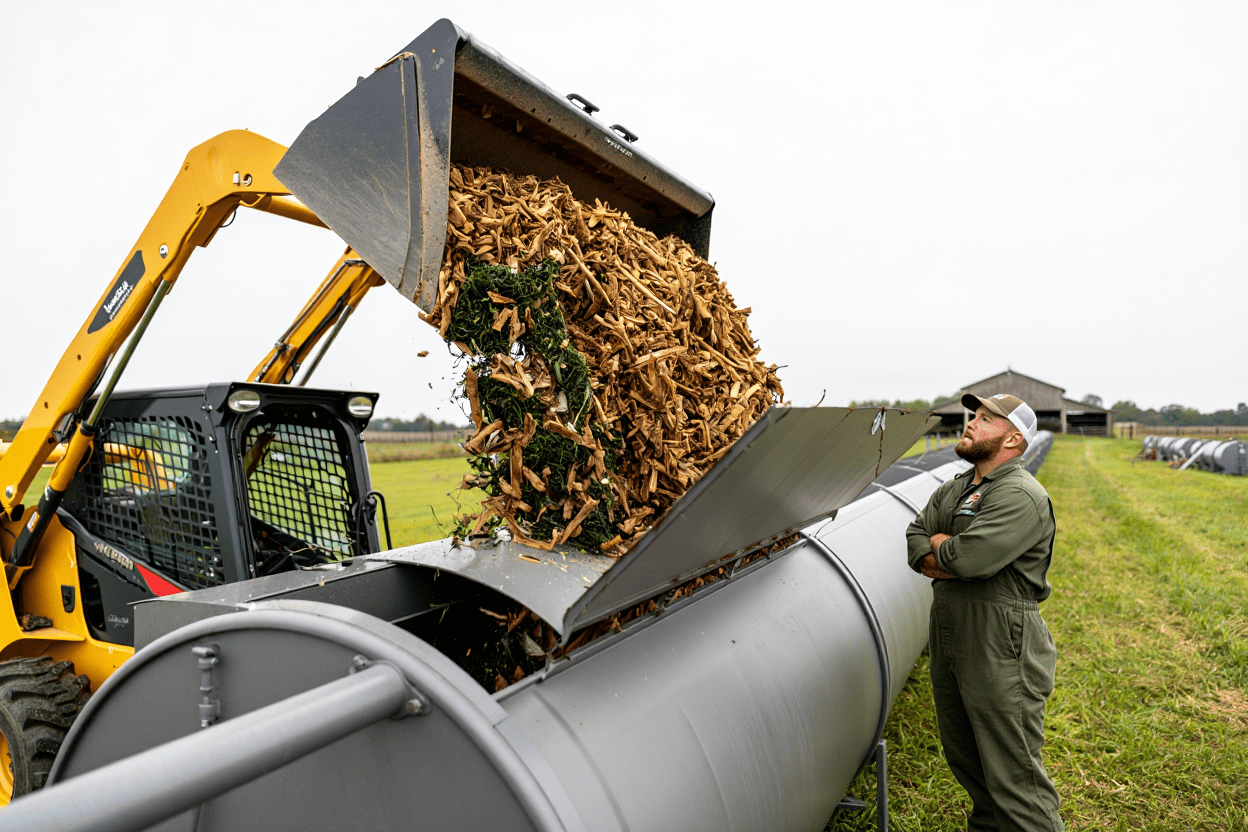
Best Systems for High-Volume Processing Plants
High-volume facilities need systems that can scale with production, tolerate variable waste streams, and operate with minimal disruption. For plants producing significant amounts of wet organic waste, industrial biodigesters can be especially effective. These systems are well suited for fruit and vegetable processing, dairy operations, beverage plants, and prepared food facilities.
Key Strengths of Biodigesters
- Capacity for high-volume wet waste
- Renewable energy production through biogas capture
- Reduced landfill dependence
- Lower greenhouse gas emissions compared to traditional disposal
- Support for circular waste management goals
Composting systems are another strong fit for large plants, especially those with access to outdoor space or downstream partners that can use finished compost. Enclosed and in-vessel composting systems provide better control over odor, pests, and environmental exposure than open-air approaches.
Supporting Equipment That Often Improves Results
- Screw presses for dewatering
- Depackaging systems for unsold packaged goods
- Conveyors and sanitary transfer bins
- Tanks and pumps for slurry management
- Odor control systems
- Automated controls for tracking input and performance
Reducing Costs and Improving Efficiency
Waste disposal is often treated as a fixed cost, but it is far more manageable than that. Better systems reduce expenses across hauling, labor, sanitation, and contamination control while improving daily plant performance. One of the biggest cost drivers is weight. Food waste contains substantial moisture, so many plants are effectively paying to transport water instead of solids.
Dewatering technology can dramatically reduce hauling weight, lower landfill and tipping fees, and extend the life of storage systems. When paired with biodigesters or composting systems, dewatering can improve the efficiency of the entire downstream process.
Where Plants Often See Measurable Gains
- Lower waste hauling and landfill tipping fees
- Reduced labor tied to manual waste movement
- Improved housekeeping and sanitation
- Better odor control
- Fewer pest issues
- Greater visibility into waste generation trends
- Improved uptime through cleaner work areas
Facilities that also want a thermal disposal path for certain materials can review incinerator solutions as part of a broader waste management strategy, especially when different waste types require different end routes.
Compliance and Environmental Considerations
Food processing plants operate in an environment where compliance and environmental performance increasingly affect business success. Waste disposal decisions influence not only daily operations but also public perception, customer expectations, and regulatory standing.
Common Compliance Areas
- Solid waste disposal
- Wastewater discharge
- Odor and air quality management
- Stormwater protection
- Organic waste diversion
- Recordkeeping and reporting
- Handling of byproducts and residual materials
Biodigesters can support compliance by reducing the volume of organic waste sent off-site and providing a more controlled treatment pathway. Composting systems can support diversion goals when site management, contamination control, and documentation are handled correctly. The goal is not just installing equipment. It is building a repeatable process that supports performance and environmental responsibility at the same time.
Frequently Asked Questions
What is the best food waste disposal method for processing plants?
The best method depends on waste type, volume, moisture content, available space, and regulatory requirements. Biodigesters and composting systems are two of the most scalable options.
Are biodigesters good for high-moisture food waste?
Yes. Biodigesters are especially effective for wet organic waste and can convert that material into biogas and digestate.
Can composting work at an industrial scale?
Yes. Enclosed and in-vessel composting systems are designed to handle large waste volumes with better control over odor, moisture, and processing conditions.
How do waste processing systems reduce costs?
They reduce hauling weight, lower landfill fees, improve labor efficiency, and create cleaner, more organized waste handling workflows.
Do food processing plants need to worry about compliance?
Yes. Waste disposal affects environmental compliance, sanitation, reporting, and local diversion requirements.
Is it possible to combine multiple waste solutions?
Yes. Many plants use a combination of separation, dewatering, biodigestion, and composting to manage different waste streams more effectively.
Explore Smarter Waste Processing with Bierman Equipment
For processing plants ready to improve waste handling, reduce disposal costs, and build a more efficient operation, the right equipment makes all the difference. Bierman Equipment delivers advanced systems designed to improve workflow, strengthen sanitation, and support long-term operational growth.
Learn more about Bierman Equipment’s background in agricultural and industrial waste systems, explore our composting and material handling equipment, or connect with our equipment specialists to discuss the right fit for your plant.